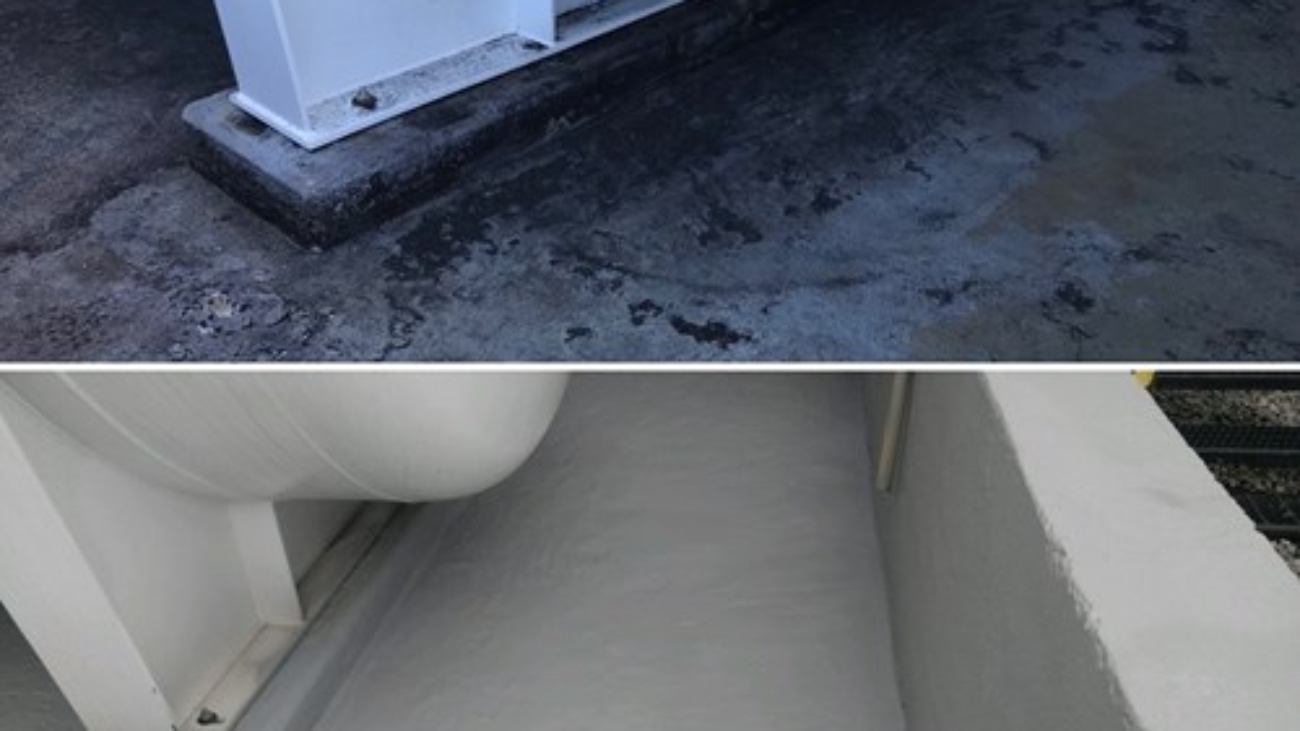
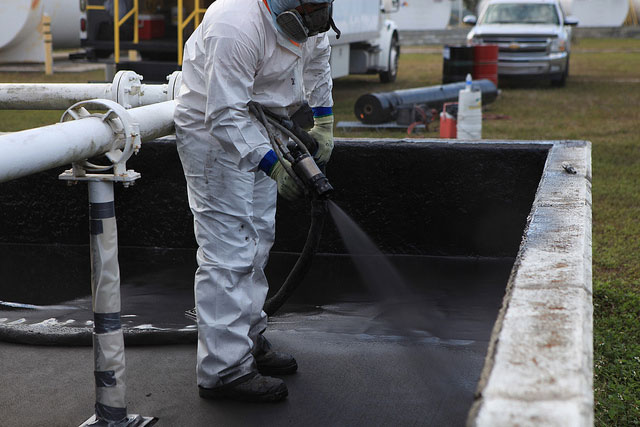
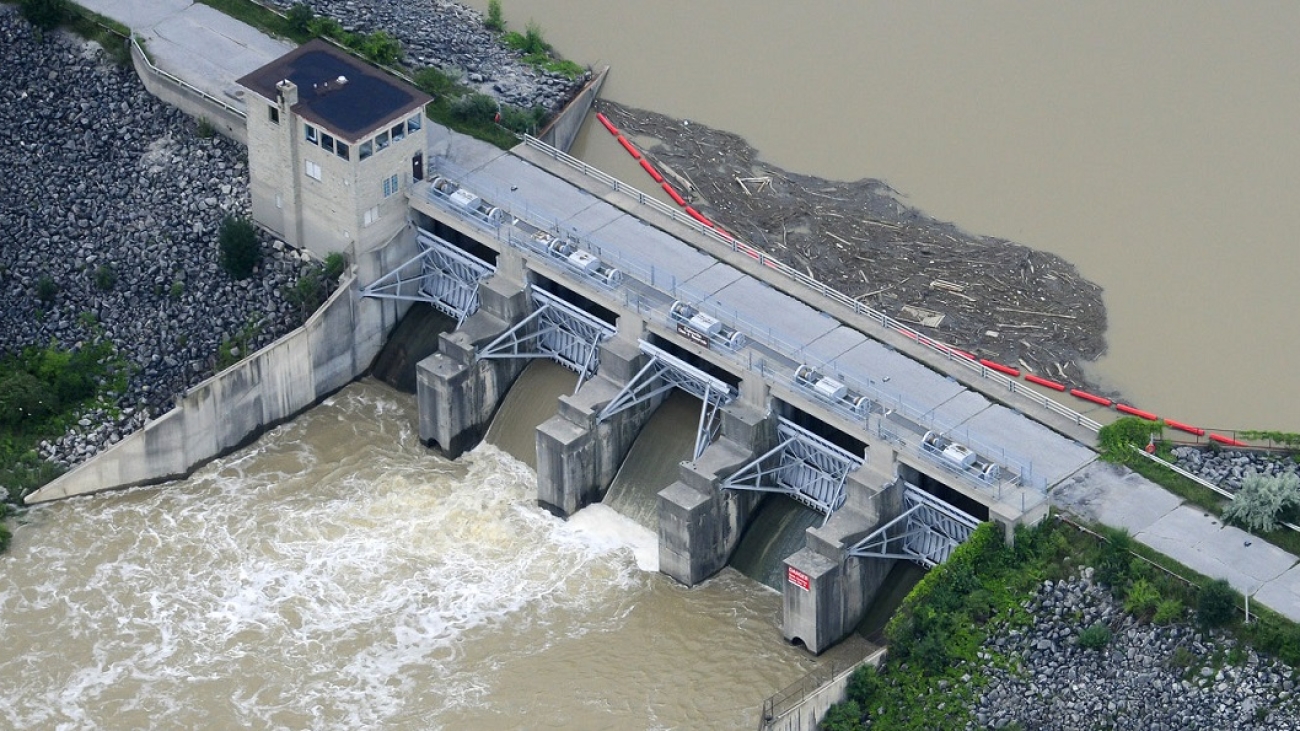
Canadian Flood Control Polyurea

Why Polyurea Coatings Could Save Canadian Flood Control Infrastructure

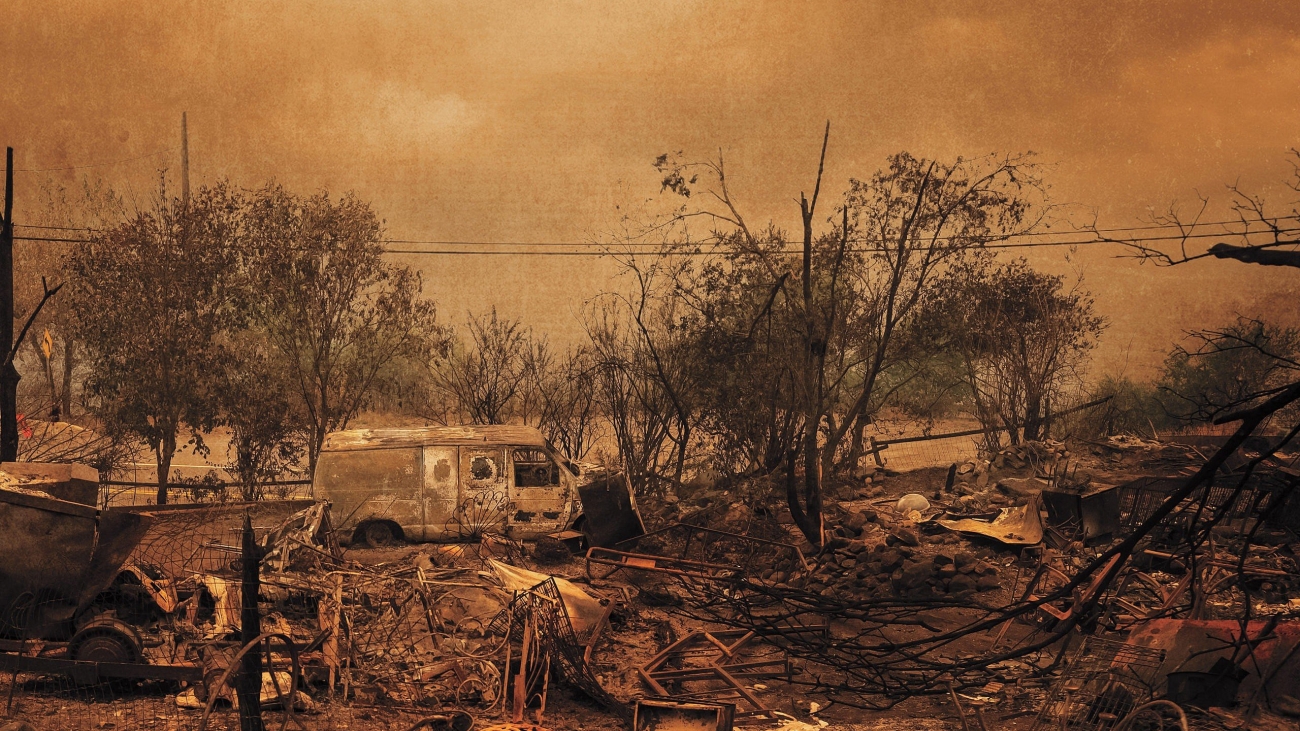
The dangers of climate change are often discussed as if they only exist in the distant future, but in reality climate change is a gradual process that’s already begun, and Canada is not immune. 

Canadians have surely noticed weather is becoming more chaotic with each passing year. As Canada continues to break precipitation records, flood control infrastructure that was built for calmer storms is unprepared. While the world tries to combat climate change at the source, even the most optimistic projections reveal that Canadian flood control infrastructure needs a major overhaul if people and property are to survive the battle that is to come over the next few decades. But, demolishing and rebuilding miles of reinforced concrete is neither fiscally nor environmentally realistic for Canadians and their municipalities. Instead, engineers can turn to spray‑applied polyurea flood wall coatings; thin and seamless membranes that can be installed quickly and cost-effectively and add decades of service life to critical flood‑control works.

WHAT ARE POLYUREA FLOOD CONTROL COATINGS AND WHY DO THEY MAKE ALL THE DIFFERENCE?

Polyurea is a two‑component, 100%‑solids elastomer that reacts instantaneously as it’s ejected from high-pressure spray equipment. Its gel time is on the order of seconds and full cure finishes far faster than competing materials technologies, so return to lifesaving service is as fast as possible. One of many of polyurea’s strengths is that it forms a monolithic film that is free of pinholes or cold joints, making it a single, powerful impermeable barrier. Once polyurea cures, the membrane is both hydrophobic and impermeable, reliably resisting hydrostatic pressures that would otherwise force water through cement paste or construction joints. Polyurea also exhibits an order‑of‑magnitude gain in wear resistance compared with bare concrete, which is an especially important metric when high‑velocity floodwater is loaded with angular sediment.

SPEED AND DURABILITY WITH THE ULTIMATE IMPERMEABILITY

Concrete floodwalls are required to withstand intense and prolonged physical and chemical stress, which is why polyurea’s tensile profile is invaluable. Polyurea films stretch over working cracks without tearing or delaminating, and this same ductility lets the lining move with sheet‑piles or precast panels in modular flood‑gate systems that are assembled and disassembled seasonally. But in many cases, the decisive factor is not strength, but speed; crews armed with a modern rig can rehabilitate 100–150 m2 of wall in a single shift, even when the substrate is still damp from moisture-laden treatments. The surface also becomes foot‑traffic‑ready in hours or even days faster than with polyurea’s alternatives, and can withstand re‑pressurization of a pump sump or canal within just a single tide cycle. This is an impossible schedule for traditional epoxy, cementitious, or HDPE‑sheet systems, so polyurea is the uncontested choice for “just‑in‑time” interventions.

MULTI-LAYER, MULTI-LEVEL SAFETY

The problems that polyurea floodwall coatings seek to solve are a consequence of climate change, so it’s essential that one environmental issue isn’t replaced by another. With polyurea coatings, this is not the case, especially when compared to pouring several meters of fresh concrete. A typical ~2 mm layer of polyurea adds less than 2 kg CO2-e per m2, which is roughly one tenth the carbon footprint associated with a concrete overlay. At the same time polyurea also imparts robust durability well beyond what can be expected of normal concrete so infrastructure better withstands physical and chemical stress, thereby saving increasingly scarce or expensive resources. And while inherently safer considering its application to control dangerous floodwaters, polyurea additionally promotes safety through the incorporation of high‑visibility flood‑stage markings in lieu of using separate signage that would fade or delaminate sooner.

CHOOSE POLYUREA SPRAY-APPLIED COATINGS FOR CANADIAN FLOOD CONTROL INFRASTRUCTURE PROJECTS

Canadian flood‑control infrastructure has to contend not just with more water, but shorter warning times and tighter budgets. Unfortunately these conditions aren’t expected to dissipate any time soon, but the good news is that by delivering a fast‑curing, crack‑bridging, chemically inert membrane, polyurea flood wall coatings allow stakeholders to rehabilitate existing structures instead of replacing them, thereby enjoying the same extension in service life, improved resilience, and satisfaction of modern sustainability targets with minimal disruption. Municipalities weighing the cost of another concrete pour against the certainty of the next river from above can use spray‑applied polyurea to provide a high‑performance retrofit that is ready today and prepared for the future, no matter how chaotic or uncertain, which is about all that’s guaranteed. 

Cover_WEB_OriginalSize

The Growing Pressure from Climate Events on Canadian Infrastructure

In many parts of Canada, the climate has shifted in ways that have surprised even long-time residents. In recent months, news reports have shown images of streets turned into rivers, highways swallowed by water, and bridges closed due to sudden flooding or ice damage. These stories no longer feel unusual. Across provinces, communities now face climate events that move faster, last longer, and leave behind greater damage than before.

Infrastructure stands at the center of these challenges. Roads, tunnels, bridges, and parking decks all carry the burden of weather extremes that strike with increasing force. The past few years have revealed a troubling pattern where systems built decades ago begin to fail under conditions they were never designed to endure. Heavy rainfall overwhelms drainage networks (View Video).

Freeze-thaw cycles split apart roadways and concrete foundations. Once water finds its way inside, it rarely stays still. It spreads through cracks, weakening structures in ways that often go unnoticed until damage becomes visible—and expensive.

Recent floods in Quebec and British Columbia have sparked national discussions about how Canada must adapt its infrastructure. Engineers and city officials have called for stronger protections that go beyond short-term fixes. The goal, as many now describe it, is to build systems that do not merely survive today’s climate, but also remain reliable for decades to come.


Polyurea’s Expanding Role in Infrastructure Protection

Among the methods that have gained ground during these discussions, polyurea has emerged as a practical tool for safeguarding structures from water, corrosion, and physical wear. Originally developed for industrial uses, polyurea now plays a central role in public projects that need long-lasting resilience.

Polyurea’s strength lies in its ability to form a seamless, flexible barrier that holds up under heavy use and harsh weather. Once applied, it bonds tightly to surfaces such as concrete, steel, and wood. This bond creates a continuous layer that blocks water from entering cracks or joints. Unlike traditional sealants, polyurea does not rely on seams or adhesives that might fail after repeated exposure to rain, snow, or shifting temperatures.

Canadian engineers have started using polyurea coatings in a range of projects, from bridge decks and parking garages to tunnel linings and water containment areas. These coatings work because they handle more than water. They also resist chemicals found in de-icing salts and urban runoff, which can erode untreated surfaces over time.

One reason polyurea has gained such strong support from infrastructure experts involves its speed of application. In places where construction timelines remain tight, polyurea’s fast curing process allows projects to move forward without long delays. Workers apply the coating, and within minutes, it forms a durable shield ready for use. This quality proves essential for cities that need to repair critical systems without closing roads or public areas for extended periods.


How Canadian Infrastructure Faces Unique Risks

Canada’s climate adds further urgency to these developments. In colder regions, infrastructure must withstand not only rain but also long periods of freezing temperatures followed by sudden thaws. This freeze-thaw cycle places extreme stress on surfaces, as water expands and contracts within small gaps and pores. Over time, the repeated movement breaks down materials and opens new paths for water to enter.

Polyurea addresses this risk by remaining flexible even in low temperatures. When applied correctly, it stretches with the surface rather than cracking or pulling apart. In this way, it protects both the exterior and interior layers of infrastructure, reducing the chance of hidden damage that can spread unseen.

Recent reports have also highlighted wildfire damage in western Canada. These fires, aside from their immediate destruction, often leave infrastructure vulnerable to erosion and water damage once rains return. In such cases, polyurea coatings have been used to protect exposed surfaces, preventing post-fire deterioration that would otherwise weaken structures already strained by heat.

Urban environments face their own challenges. Cities across Canada have seen aging concrete parking structures and pedestrian overpasses deteriorate under the combined effects of vehicle traffic, moisture, and de-icing chemicals. Polyurea has shown strong results in these situations as well, with coatings that not only stop water from entering but also reduce future maintenance needs.


The Broader Shift Toward Resilience and Longevity

What has become clear through these developments is that infrastructure planning now follows a different path than it did just a generation ago. The focus has shifted from building for average conditions to building for extremes. Engineers no longer ask whether a structure can survive typical weather patterns. Instead, they ask whether it can endure the worst-case scenarios that are becoming more common each year.

Polyurea fits into this new mindset not because it offers a quick fix, but because it provides long-term reliability in situations where failure carries serious consequences. Its ability to prevent water infiltration, resist chemical damage, and withstand physical stress makes it well suited for projects where durability cannot be compromised.

In interviews with project managers working on flood-prone infrastructure, many describe polyurea as part of a broader strategy that includes stronger foundations, better drainage systems, and advanced monitoring technologies. By combining these approaches, Canadian cities and towns aim to create systems that serve their communities for decades, rather than requiring constant repairs after every storm.


A New Understanding of Infrastructure’s Role

The national conversation surrounding infrastructure protection reflects more than just technical concerns. In many ways, it highlights how closely connected infrastructure has become to everyday life. When roads flood, people lose access to work, schools, and essential services. When bridges close, entire regions face delays in emergency response and supply deliveries. In these moments, infrastructure proves itself not as a background system, but as a lifeline that holds communities together.

By investing in technologies such as polyurea, cities send a message that they recognize these risks and intend to meet them with lasting solutions. The coatings applied today may seem like a small detail, yet they form part of a larger effort to adapt Canada’s built environment to a world where uncertainty has become the norm.

As provinces continue to recover from recent floods and fires, and as new projects begin across the country, the role of materials like polyurea will likely grow. Their success does not come from promises of perfection, but from their proven ability to extend the life of essential infrastructure, keeping it safe and functional in the face of rising challenges. In this way, polyurea has become not only a tool for engineers, but also a quiet safeguard for communities across Canada.

ArmorThane Cistern Liner Solution

Sealing Every Drop: Why Polyurea Is Becoming the Go-To Liner for Modern Cisterns

The Shrinking Margin for Water Loss

Across drought-stricken hillsides of the southern prairies, Caribbean resorts in Vancouver, and sprawling farm belts in the Prairie Provinces, water-storage failures are no longer rare mishaps, they are operations-critical events. Aging concrete vaults leach chloride ions that rust rebar, steel bolted tanks develop seam leaks, and roll-on epoxies chalk or crack after a few freeze–thaw seasons. As regulators tighten leakage limits and insurers push “zero-loss” targets, asset owners are seeking lining systems that install quickly, seal permanently, and never compromise water quality. These pressures have placed spray-applied polyurea squarely at the center of the cistern conversation.

Polyurea Chemistry Meets Cistern Demands

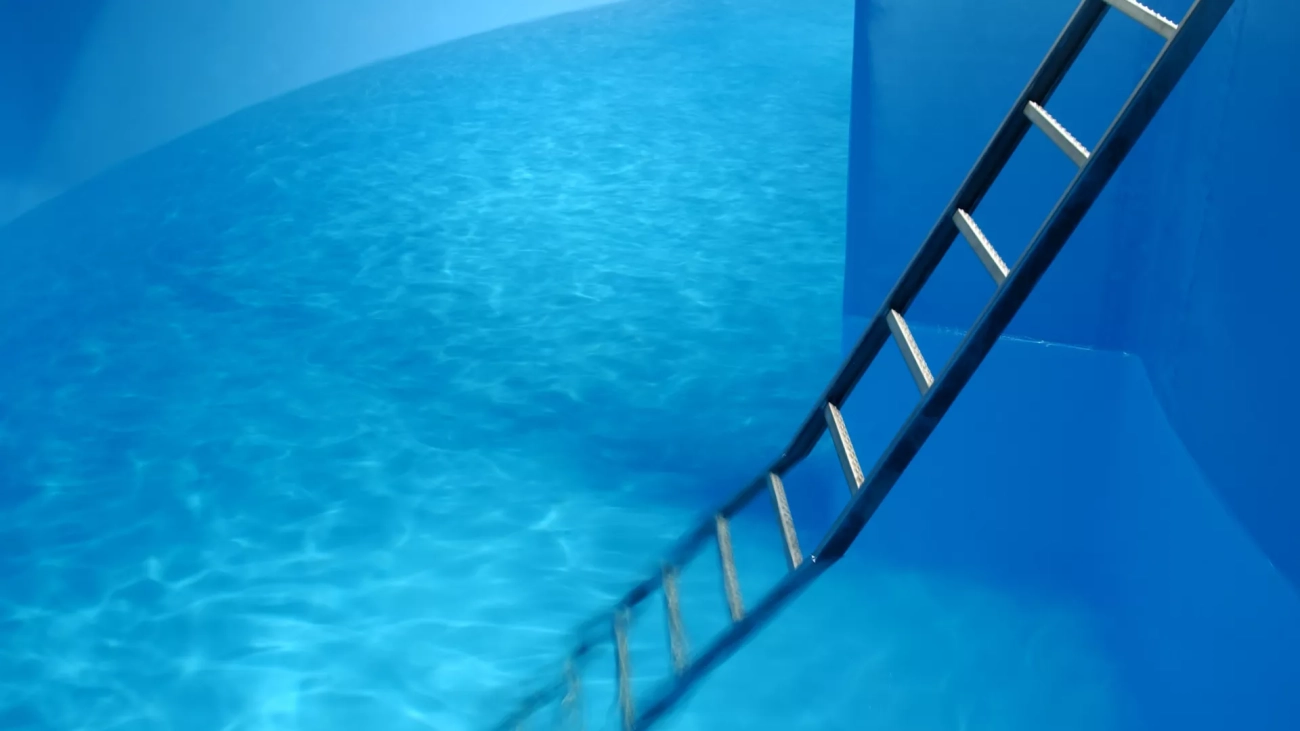
Polyurea’s appeal begins at the molecular level. Two heated liquid components, an isocyanate and an amine-terminated resin, travel through separate fluid paths and atomize together only inside the spray gun’s mixing chamber. Reaction happens in milliseconds; the coating hits the wall as a gel and becomes tack-free in seconds. This hyper-fast polymerization produces a seamless elastomer whose elongation can exceed 300 %, yet whose tear strength rivals high-grade rubber. Just as important for cistern service, properly formulated polyurea is hydrolytically stable and can pass stringent potable-water extraction tests such as NSF/ANSI 61. For both concrete and steel substrates the coating functions as an impermeable, chemically inert bladder that flexes with settlement, vibration, or temperature swings instead of cracking like brittle epoxies or unzipping like welded membranes.

Performance Differentiators in the Field

Comparison tests tell a clear story. Where a two-part epoxy may require 12–48 hours before refilling, a polyurea-lined cistern often returns to service the same day, critical for rain-harvesting systems that must capture the next storm event or processing plants that cannot interrupt shift schedules. In hydrostatic pull-off experiments, polyurea routinely maintains strong adhesion even after countless freeze–thaw cycles, while flexible PVC liners show edge creep and blistering well before. Field crews report similar results: municipal utilities routinely document a significant reduction in annual liner maintenance hours after switching to spray polyurea, largely because inspectors could no longer find pinholes or joint failures. Lower life-cycle repair costs, along with the absence of seams where bacteria can colonize, give polyurea a compelling total-ownership advantage.

Market Momentum and Business Prospects

Across residential, agricultural, and industrial markets, demand for reliable cistern linings is expanding as owners grapple with drought‐driven regulations, aging infrastructure, and rising expectations for water stewardship. When authorities encourage rain harvesting, farms insulate themselves against erratic irrigation supply, or factories commit to closed-loop process water, each new tank or retrofit represents a fresh coating opportunity. Polyurea’s ability to go in fast, seal permanently, and keep maintenance costs predictable positions coating contractors to capture that work without radically retooling their businesses. Firms already familiar with plural-component spray equipment can add cistern liner projects with modest investment, while entrepreneurs see an approachable entry point into the protective-coatings industry, one where quality counts more than commoditized square-foot pricing.

Execution Essentials: From Prep to QC

Still, polyurea is not a spray-and-pray miracle. Moisture content below roughly 5 % in concrete, standardized cleanliness for steel, and appropriate substrate temperatures remain non-negotiable. Plural-component proportioners must maintain a balanced 1:1 volume ratio and component temperatures within a two-degree window to avoid off-ratio cure. Holiday detection with low-voltage wet sponge or high-voltage spark tests verifies continuity, while adhesion pull-tests confirm the bond before potable water certification. Manufacturer-led training pathways help new entrants master these details, and third-party inspector programs now include polyurea-specific modules, evidence that the technique is maturing into a mainstream standard rather than a niche specialty.

Looking Ahead: Polyurea’s Role in Water Resilience

Polyurea technology is evolving on several fronts that matter to cistern performance. Formulators continue to enhance UV-stability packages, helping aromatic systems resist chalking and color shift in partially translucent or open-top reservoirs. Advances in amine chemistry are lowering cure exotherm and broadening the application temperature window, allowing crews to work through wider seasonal swings. On the job-site side, incremental automation, from more intuitive proportioner controls to guided spray patterns, reduces operator error and promotes consistent film build. As these improvements reach the market, they reinforce polyurea’s core value proposition: a fast, durable, and food-safe barrier that helps water managers safeguard every stored gallon with confidence.

Applicator-trowel-manhole-lining-s-w_SmartCropSixteenToNine

What Lies Beneath: The Future of Manhole Linings in Canada

Canadian cities rely on buried systems that keep daily life moving. Beneath roads and sidewalks, manholes offer access to wastewater and stormwater networks. These structures support inspection, cleaning, and repair. But over time, their walls break down. Moisture, gas, and freeze-thaw cycles wear away the concrete. Left unprotected, manholes leak, collapse, or contribute to surface failures. To extend their lifespan, municipalities now turn to better manhole lining methods.

Older practices involved patching with cement or installing liners made from plastic or fiberglass. These methods worked for a while but failed to protect against modern threats—corrosive gases, groundwater infiltration, and extreme weather shifts. Today, engineers and public works teams look to coatings. Among them, polyurea has emerged as a top performer.

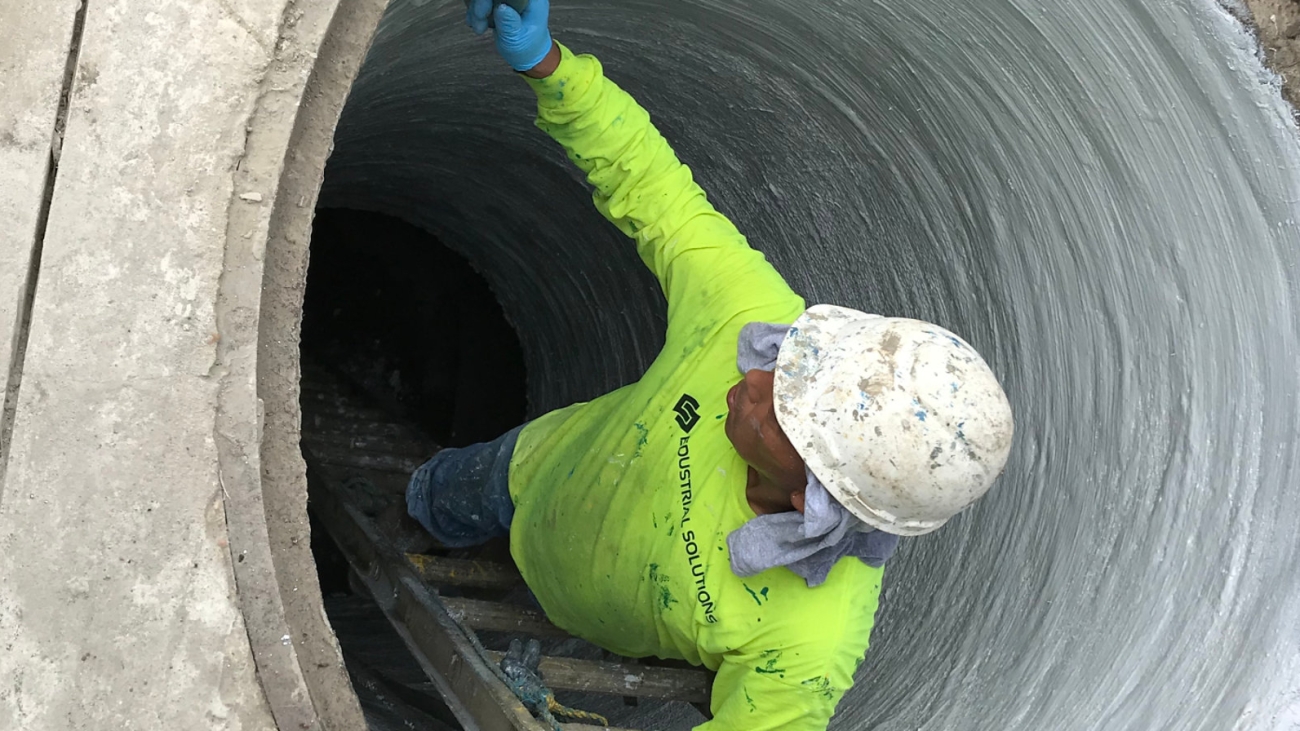
Polyurea works because it cures quickly, adheres tightly, and resists stress. It handles the expansion and contraction that winter temperatures cause. It blocks chemical attack and water intrusion. When sprayed inside a prepared manhole, it forms a seamless protective layer. For cities facing aging infrastructure and growing budgets, that performance matters.

Across Canada, municipalities weigh the cost of contracting manhole repairs. Outside crews charge for mobilization, equipment, and downtime. Some cities, especially those with large networks or remote sites, now bring the work in-house. These public works departments train their staff and purchase spray equipment to handle manhole rehabilitation themselves.

When municipalities spray their own manholes, they gain direct control. They decide when and where to act. They reduce repair delays. They manage quality from start to finish. With modern polyurea spray rigs, local teams can travel across cities, towns, and even northern communities where weather shortens work seasons.

That shift reflects a broader trend in Canadian infrastructure: do more with less, and make it last longer. Many sewer systems in Canada date back to the 1950s and ’60s. Their manholes show clear signs of aging. Cracks spread. Groundwater leaks in. Sewage escapes into soils. Each of those failures increases treatment costs and threatens the environment.

A proper manhole lining prevents those failures. Polyurea lines every inch of the internal surface. It bonds to irregular contours and covers seams. Once cured, it blocks inflow, stops corrosion, and resists freeze-thaw damage. That reliability turns a failing manhole into a long-term asset.

Application techniques continue to evolve. Spray equipment now offers greater control over pressure and temperature. New systems ensure consistent mix ratios. Some rigs include sensors that monitor coating thickness in real time. These tools help public works teams apply polyurea correctly the first time.

Surface preparation still plays a key role. Crews remove debris, roots, and damaged material before spraying. Without proper prep, even a strong coating will fail. But when done right, polyurea bonds instantly and cures within seconds. That speed keeps traffic disruptions low and repair cycles short.

In the future, we may see more automation in these systems. Robotic nozzles could enter confined spaces and coat surfaces with little manual effort. Inspection tools may scan linings using thermal or ultrasonic imaging. As Canada modernizes its water infrastructure, these tools may become standard.

Polyurea also fits Canada’s push toward resilience. As climate change increases rainfall intensity and flood risks, manholes must hold firm under pressure. Linings help prevent sewer surcharges and reduce system inflow. That keeps treatment plants from being overwhelmed and helps cities meet environmental goals.

Training remains essential. Cities that build their own coating teams must invest in education. Crews need to understand spray methods, equipment operation, and material behavior. They must know how to inspect linings and assess repairs over time. With that training, polyurea becomes not just a material—but a strategy.

The chemistry itself will likely improve. Polyurea already performs well, but researchers continue to test blends that handle colder climates, cure under moisture, or bond better to older concrete. These improvements will give Canadian municipalities more tools to meet their unique challenges.

Coatings must work as part of a full system. Manhole success depends not only on linings but also on frame repairs, grade rings, and joint sealing. Polyurea addresses the inner walls. Other steps ensure the rest holds up. A complete approach reduces long-term costs and limits future failures.

As more municipalities choose to rehabilitate rather than replace, polyurea will continue to grow in use. The material delivers strength and flexibility in one step. It avoids excavation. It keeps roads open. It meets performance demands without added stress on local crews.

While the public rarely thinks about what lies below, lined manholes play a critical role in protecting streets, streams, and groundwater. They keep wastewater in the system and shield the infrastructure from corrosion. With polyurea, Canada can strengthen that line of defense.

The future of manhole lining in Canada will depend on smart choices. Cities that adopt reliable coatings, train local teams, and invest in durable equipment will stay ahead. Whether by partnering with contractors or shifting work in-house, success depends on quality materials and preparation.

Canada’s underground infrastructure will continue to age. But with polyurea, cities can give their manholes new life—without rebuilding from scratch. The next generation of manhole care will happen one spray at a time, guided by data, driven by durability, and carried out by teams that know how to protect what can’t be seen.

freepik__retouch__71770

Concrete Rehabilitation With Polyurea: A Modern Approach to Longevity

The construction industry depends on concrete as its fundamental foundational material. The infrastructure structures of roads, bridges, tunnels, and buildings depend fundamentally on their tensile strength. The material becomes brittle due to exposure to moisture, chemicals, and temperature variations.

The structure suffers from failure when no intervention occurs before the situation progresses to costly repair requirements or total replacement needs. Polyurea coatings present an effective solution that restores structural integrity and prolongs the system’s lifetime before stopping future deterioration. The breakdown of concrete structures generates extensive damage to infrastructure systems.

While concrete looks sturdy, it naturally attracts moisture. The concrete’s porous structure allows water, dissolved salts, and chemicals to penetrate its holes. Freeze-thaw cycles grow more frequently in cold weather conditions, leading to additional infrastructure damage. The freezing water within the material expands, causing its width to increase and further widening existing cracks. The moisture-reaching steel reinforcement triggers its corrosion process to begin. The expansion of rust presses down on the adjacent concrete, generating spalling and reducing structural strength. The deterioration process speeds up when concrete systems come into contact with chemicals. Industrial facilities, wastewater plants, and bridges experience continuous exposure to corrosive substances. The cement matrix material breaks down into manageable pieces when concrete surfaces come into contact with acids and oils and de-icing salts. Concrete surfaces will continue to deteriorate without protection, needing more regular repairs that affect operational productivity.

Polyurea Coatings Extend the Service Life and Intensify the Durability of Concrete Restoration Jobs.

The current repair strategies include applying bandages to cracks, using sealants, and adding additional structural layers. The functional restoration provides no long-term protection against future degradation.

Polyurea coatings represent an alternative solution

Polyurea comes in spray form, creating a continuous, flexible barrier that directly bonds with concrete substrates. The flexible sealant outperforms traditional rigid sealants because it elongates with structural movement to prevent fresh crack development.

Polyurea shows exceptional water resistance, which proves beneficial for concrete restoration work in areas with high moisture presence. Polyurea exhibits instant setting characteristics that surpass epoxy coatings that require prolonged curing times. Facilities can resume operations more quickly because of this fast curing process, which reduces downtime. Polyurea coatings provide durable protection against acids solvents and industrial fluids; otherwise, compatibility issues would occur with conventional coatings.

Application of Polyurea on Damaged Structures.

The application of polyurea starts with site preparation for better adhesion. The service includes concrete chipping for removal, total surface cleaning and crack repair. Polyurea spray applications create a uniform coating that covers all structural details. The instant bond forms a barrier that protects against moisture penetration through the concrete pores. Polyurea conforms to irregular shapes to protect corners, extension joints, and exposed rebar without establishing vulnerable areas. This approach extends beyond industrial settings. Polyurea serves roadways and airfields alongside bridges parking decks and seaside structures by providing water exclusion and erosion protection against impact damage. The extended service life gained from protective coatings enables older structures to continue operational use rather than requiring expensive replacement.

Future Development Strategies for Concrete Repair and Maintenance

Since existing infrastructure continues to age, implementing lasting solutions announces itself as a priority need. Polyurea coatings lead infrastructure restoration practices toward a forward-thinking maintenance approach away from traditional repair actions. Their ability to restore and reinforce concrete makes them valuable in maintaining critical structures. The ongoing development of coating technologies will keep polyurea relevant for extending service life and decreasing maintenance expenses for concrete substrates.

What Are the Benefits of Polyurea Coating for Industrial Applications in Canada?

How Polyurea Coating Enhances Industrial Applications in Canada

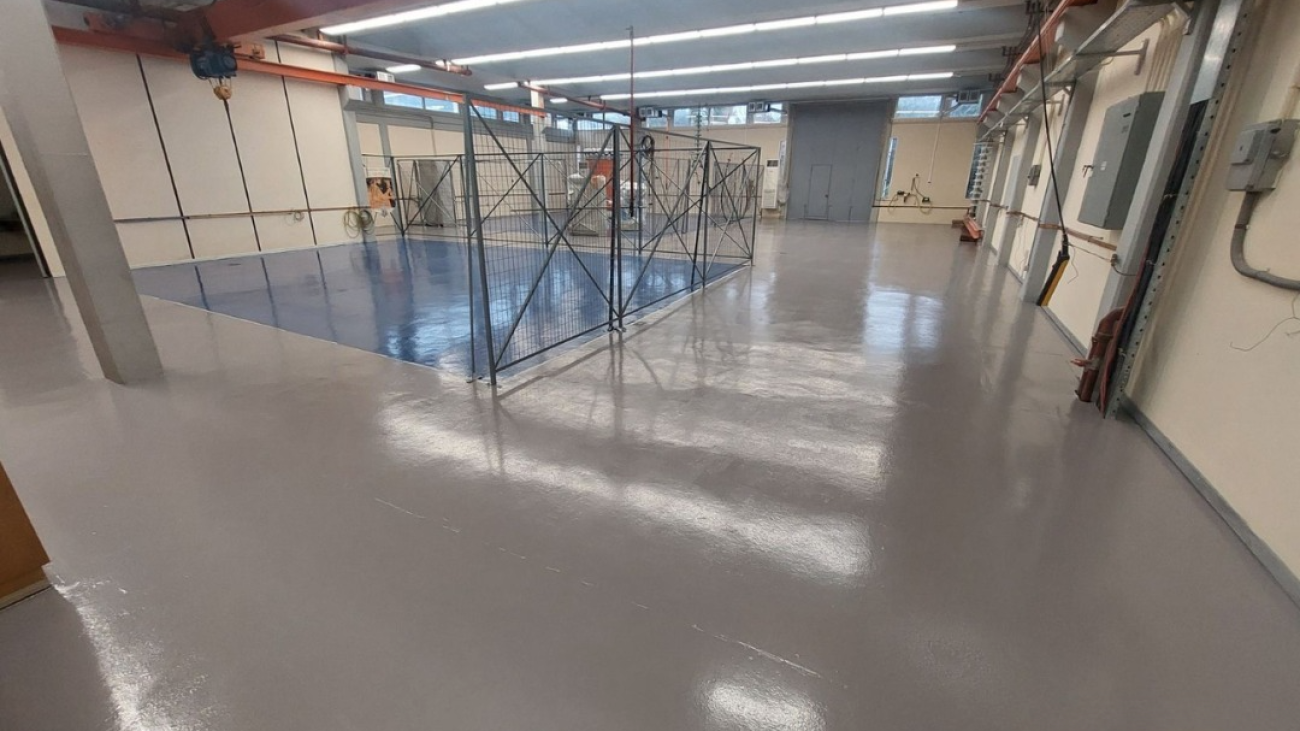
Industrial applications in Canada are being enhanced by the use of polyurea coatings. Polyurea is a two-component sprayable elastomeric material that creates a durable, waterproof and chemical-resistant coating. This coating has become increasingly popular due to its fast-curing properties, high abrasion and tear resistance, and its ability to adhere to a wide variety of substrates. Polyurea coatings are ideal for a range of industrial applications, including flooring, tanks, piping, and structural components, as well as for waterproofing and corrosion prevention.

One of the main benefits of using polyurea coatings is their fast curing time. Polyurea coatings cure and harden in seconds, allowing for faster application and quicker return to service. This is ideal for industrial applications where time is of the essence. Furthermore, polyurea coatings are flexible and resistant to extreme temperatures, making them suitable for a variety of industrial environments in Canada.

Polyurea coatings are also highly resistant to abrasion and tears, making them ideal for a range of industrial applications. They have excellent adhesion to a wide variety of substrates, making them suitable for use in corrosive environments. Polyurea coatings are also highly resistant to a range of chemicals, making them ideal for use in industrial applications.

Polyurea coatings are also extremely durable and long-lasting, making them cost-effective for industrial applications. They are easy to apply and maintain, and their fast-curing properties mean that they can be applied quickly and efficiently. This makes them ideal for a range of applications in Canada, from industrial floors to tanks, piping, and structural components.

Overall, polyurea coatings offer numerous benefits for industrial applications in Canada. They are fast-curing, durable, and offer excellent abrasion and tear resistance. Furthermore, they are flexible and resistant to extreme temperatures, and are highly resistant to a range of chemicals. Polyurea coatings are also easy to apply and maintain, making them cost-effective for industrial applications.

The Benefits of Polyurea Coating for Canadian Industries

Polyurea coating is a versatile and reliable coating solution that is becoming increasingly popular in many industries across Canada. This coating type offers a range of benefits that make it an ideal choice for many applications. In this article, we will explore the benefits of polyurea coating for Canadian industries.

First and foremost, polyurea coating offers superior protection against environmental elements and wear and tear. It is highly resistant to corrosion, abrasions, and UV rays, making it an ideal choice for protecting metal surfaces from rust and other forms of deterioration. Furthermore, polyurea is extremely durable and can last for many years with minimal maintenance. This makes it an excellent choice for industries that require long-term protection for their assets.

Polyurea coating also offers excellent chemical resistance. This means that it can withstand exposure to a wide variety of chemicals without becoming damaged. This makes it ideal for industries that need to protect their assets from hazardous chemicals. Additionally, polyurea coating can be applied quickly and easily, saving valuable time and money in the process.

Finally, polyurea is an environmentally friendly option. It is low in VOCs, making it safe for humans and wildlife. Additionally, it is non-toxic and non-flammable, making it a safe choice for both residential and industrial applications.

In conclusion, polyurea coating is an ideal choice for many industries in Canada. Its superior protection against environmental elements, excellent chemical resistance, and environmental friendliness make it an excellent choice for any industry that needs to protect its assets. Additionally, its quick and easy application make it a cost-effective option for many applications.

Exploring the Advantages of Polyurea Coating for Industrial Applications in Canada

Polyurea coatings are becoming increasingly popular for industrial applications in Canada due to their many advantages. These coatings offer superior performance over traditional coatings, such as epoxies, due to their superior chemical and mechanical properties. As a result, polyurea coatings can be used in a variety of industrial applications, including corrosion protection, waterproofing, and fireproofing. In this article, we will explore the advantages of using polyurea coatings in industrial applications in Canada.

One of the main advantages of polyurea coatings is their durability. These coatings are highly resistant to abrasion, chemical attack, and ultraviolet radiation, making them the ideal choice for industrial applications. Additionally, polyurea coatings are elastic and flexible, allowing them to move with the substrate without cracking or peeling. As a result, these coatings are able to withstand harsh weather conditions, including extreme temperatures and moisture.

Polyurea coatings also offer superior protection against corrosion. These coatings are highly resistant to a variety of corrosive elements, including salts, acids, and bases. Furthermore, polyurea coatings are resistant to microbial growth, making them a suitable choice for applications in which microbial growth must be prevented. Additionally, these coatings are fire-resistant, offering an extra layer of protection in industrial applications.

Polyurea coatings are also easy to apply and quick to dry. These coatings can be applied using a variety of methods, including spraying, brushing, and rolling. Additionally, they dry quickly, allowing for quicker project turnaround times. Furthermore, polyurea coatings are available in a variety of colors, allowing for greater design flexibility.

Finally, polyurea coatings are cost-effective. These coatings are typically less expensive than traditional coatings, making them a cost-effective solution for industrial applications. Furthermore, polyurea coatings can last for years, eliminating the need for frequent repainting and other maintenance costs.

In conclusion, polyurea coatings offer many advantages for industrial applications in Canada. These coatings are durable, corrosion-resistant, fire-resistant, easy to apply, and cost-effective. As a result, they are becoming increasingly popular for industrial applications in Canada and around the world.

Strengthening Industrial Applications in Canada with Polyurea Coating

Industrial applications are an integral part of the Canadian economy, providing a wide range of products and services for the country. To ensure these applications remain safe and efficient, a range of protective coatings are used to keep them operating at peak performance. One such product is polyurea coating, a versatile and durable material that offers superior protection against corrosion, wear, and abrasion.

Polyurea coating is a two-part liquid that is applied to surfaces in a spray form. After application, it rapidly cures, creating a strong bond that is nearly impervious to the elements. As a result, polyurea coatings are extremely resistant to water and other liquids, as well as extreme temperatures and ultraviolet light. This makes them an ideal choice for many industrial applications, including those in the mining, construction, and oil and gas industries.

The use of polyurea coatings in Canada is increasing due to their superior performance and durability. In addition to providing superior protection against corrosion, wear and abrasion, polyurea coatings offer a range of other benefits. They are highly flexible, allowing them to expand and contract with the substrate, and they can be applied in a range of thicknesses to suit any application. They also boast excellent adhesion and are available in a variety of colors, making them suitable for a range of aesthetic applications.

In addition to their superior performance and durability, polyurea coatings are also cost-effective. They can be applied quickly and easily, reducing the need for costly and time-consuming labor. Furthermore, they require minimal maintenance and can be applied to a variety of surfaces, including metal and concrete. As a result, they are an ideal choice for industrial applications in Canada, providing superior protection and performance while remaining cost-effective.

Polyurea coating is an excellent choice for industrial applications in Canada due to its superior performance, durability, and cost-effectiveness. This versatile and durable material offers superior protection against corrosion, wear, and abrasion, as well as a range of other benefits. With its quick and easy application, it is an ideal choice for any industrial application, providing superior protection while remaining cost-effective.

Discover the Benefits of Polyurea Coating for Industrial Applications in Canada

Polyurea coating is an increasingly popular industrial coating option for many Canadian industrial applications. As one of the most versatile and durable coatings on the market, polyurea coatings offer a range of benefits that make them highly sought after for industrial purposes.

One of the primary advantages of using polyurea coatings for industrial applications in Canada is their durability. Polyurea coatings possess superior abrasion and corrosion resistance, making them ideal for use on surfaces that are exposed to harsh environments or conditions. This coating also offers excellent adhesion and can be applied to a variety of substrates, providing a strong bond that can withstand the harshest of conditions.

The versatility of polyurea coatings also makes them a popular choice for industrial applications. Polyurea coatings can be applied to a variety of surfaces, from metal to concrete to wood, and can be customized to meet specific needs. It can also be used to protect surfaces from extreme temperatures and UV rays. Furthermore, polyurea coatings can be applied in thick or thin layers, providing flexibility and allowing for a range of design options.

Polyurea coatings also offer excellent water resistance, making them a great choice for industrial applications in areas with high humidity or exposure to water. This water-resistant coating helps protect surfaces from moisture and the damage it can cause. Additionally, polyurea coatings are highly resistant to chemical spills and abrasion, making them a perfect choice for industrial surfaces in areas with harsh chemicals or abrasive materials.

Finally, polyurea coatings also offer excellent protection against fire, making them an ideal choice for industries in Canada that face the risk of fire. Polyurea coatings are able to withstand high temperatures and slow the spread of fire, providing an extra layer of protection for valuable assets.

Overall, polyurea coatings offer a range of benefits that make them an excellent choice for many industrial applications in Canada. With superior durability, versatility, water resistance, and fire protection, polyurea coatings are an ideal option for a variety of industrial applications.

containment

Spray, Coat, and Contain

Image result for SPRAY, COAT, AND CONTAIN polyurea

Traditional coatings have been too inflexible and not sufficiently elastic to accommodate ground, concrete, or metal substrate movement for primary or secondary containment. This deficiency can lead to cracks or holes forming in both the substrate and the coatings, which can compromise containment. However, the formulation of tough, monolithic, flexible coatings such as polyurea is now resolving this issue for contractors, engineers, and facility managers. When applied directly to concrete or metal surfaces, polyurea not only strengthens and protects lite underlying substrate but can also bridge gaps or cracks of 1/8″ or larger.

Image result for containmenmt polyurea


Furthermore, polyurea is now being applied to geotextile liners that can be swiftly rolled out in sheets to protect more heavily diminished surfaces or for use in field applications such as dirt or gravel pads at drilling sites. Once installed, applicators need only coat the liners’ seams to create a monolithic surface suitable for containment. Whether at refineries, industrial plants, or other manufacturing plants, regulations demand the use of primary and secondary containment systems to keep toxic or hazardous substances from escaping into the ground and potentially entering the water supply.

Image result for containmenmt polyurea

This implies primary containment is not foolproof. Though durable, metals corrode, concrete cracks, and is permeable, it will drain liquids if uncoated.
Therefore, secondary containment, in the form of concrete pits with barriers installed around the perimeter of a tank or other storage container, is often needed. To protect these structures, coatings such as epoxies, tars, and polyurethanes are often applied as an added protection wall. However, these traditional coatings are often inflexible when cured and can crack along with the concrete. Typical coatings do not hold up well to substrate movement or daily, seasonal, or process-related thermal expansion and contraction, which can lead to cracks and leaks.


After considerable research and testing, Collins says he turned to an advanced polyurea system from ArmorThane, a spray-applied polyurea manufacturer for primary and secondary containment. When applied to substrates such as concrete or steel, the spray-applied waterproof coating creates a durable, seamless, flexible, protective barrier that stops leaks and strengthens primary and secondary containment systems’ integrity. The coating exhibits superior physical properties such as hardness, tensile strength, and crack bridging and elongation up to 400% to create a robust, industrial-grade protective lining.

Polyurea can bridge cracks as well as flex at a rate similar to concrete and steel. This not only helps it last but also seals the concrete, so does Secondary containment, in the form of concrete pits tamers instated around the perimeter of a tank or other storage container, is often required as a back-up to primary containment does not absorb contaminants if there is a spill inside the contained area. While traditional coatings such as cementitious, epoxies, tars, and polyurethanes will prematurely fail if not installed under a relatively narrow range of temperatures, polyurea is designed for installation and use from ~4O°F to *35OCF. It sets and cures quickly and will withstand decades of freeze-thaw cycling and wide
After spraying the polyurea, return to service is almost instantaneous variations of temperature and humidity. After spraying the polyurea, return to service is almost instantaneous, making a big difference in minimizing production downtime.


They coated about 8,000 sq. ft. of concrete in 12 truck-offloading areas that required drive-in containment with ArmorThane polyurea. In some instances, trucks were safely driving across the concrete within minutes of spray application. Instead of spraying polyurea directly to the substrate, pre-sprayed composite panels can offer advantages for containment over soil, gravel, or even concrete that is too damaged to be effectively rehabilitated.

Repairing plastic liners also presents a problem at the seams, when damaged areas are cut out and new sections. Polyurea products are so much more durable than plastics for containment systems. When needed, they can custom apply more polyurea millage to geotextile panels and berms to accommodate even the heaviest truck use and vehicle abuse. To verify the strength of the polyurea coating on containment mats and berms, in fact, Collins conducted several tests.

They also ran 6,044 fully loaded water trucks across a containment system, and it withstood it with zero holes and no compromise to the liner. Collins credits both the durability of the ArmorThane polyurea and its extended recoating window for the ability of his company to reuse its containment systems extensively. To reuse a containment system, they cut it up into rolls, roll it up and move it. Then, take it back out, respond to certain areas, and reinstall the original containment system at another location. They’ve found the extended open window for recoat and repair of the polyurea allows them to cut out any damaged section of geotextile easily, put a new piece in, and spray the seams to make it virtually seamless again. They get better repair and more reuse out of our containment systems.