Polyurea Containment Mats

Polyurea Containment Mats and the Realities of Canadian Jobsite Conditions

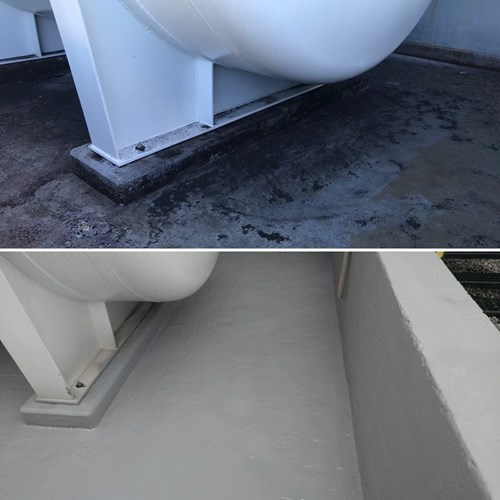
Containment mats don’t get much attention until they fail. On a remote wellsite in northern Alberta or a transformer pad outside Sudbury, a cracked mat during a spill event turns a routine day into a regulatory headache. The mat was supposed to be the backstop, and when it doesn’t hold, everything downstream gets more expensive and more complicated.

Canadian operations face a particular set of challenges when it comes to spill containment. The temperature extremes alone are enough to destroy most conventional mat materials within a few seasons. Add in the chemical exposure, the rough handling, and the distances between sites — where replacing a failed mat isn’t a same-day fix — and the material selection becomes a lot more important than most procurement teams realize.

Polyurea has been gaining ground in the Canadian containment mat market for practical reasons. The chemistry handles what Canadian conditions throw at it, and the performance holds up across the kind of environments that chew through PVC and rubber alternatives.

What Canadian Containment Mats Actually Deal With

The conditions across Canadian industrial sites aren’t uniform, but they share a common thread — they’re hard on equipment and materials.

In northern Alberta and northeastern British Columbia, winter temperatures regularly drop below -40°C. A containment mat sitting on a frozen lease site has to remain flexible enough to unfold and deploy without cracking. PVC stiffens badly at those temperatures, and standard rubber compounds lose elasticity in ways that compromise the membrane’s integrity at fold points and seams.

Spring breakup brings a different problem. Mats that survived winter now sit in standing water and mud for weeks. Moisture trapped beneath a mat or pooled on its surface creates conditions that accelerate degradation in materials that aren’t designed for prolonged water exposure.

In the summer months, particularly across the prairies and into Ontario, UV exposure becomes the issue. Mats deployed on open pads or stored outdoors take constant sun, and UV degradation weakens most coatings long before the damage is visible on the surface.

Then there’s the chemical side. Containment mats used around fuel storage, equipment maintenance, or chemical transfer points are exposed to diesel, hydraulic fluid, glycol, and a range of production chemicals depending on the operation. A mat that swells, softens, or breaks down on contact with those fluids isn’t providing containment — it’s providing the appearance of containment, which is arguably worse.

Why Polyurea Holds Up in These Conditions

Polyurea brings a set of material properties that line up directly with the demands Canadian containment applications place on a mat.

Low-temperature flexibility. This is the big one for Canadian operations. Pure polyurea systems maintain flexibility well below -40°C, which means the mat can be folded, transported, and deployed in the dead of a Fort McMurray winter without cracking at the fold lines. Most PVC products can’t make that claim with a straight face.

Elongation. Polyurea systems typically achieve 400% or more elongation, meaning the material stretches and recovers without tearing. For a mat that gets folded, rolled, dragged across gravel, and repositioned repeatedly throughout its service life, that flexibility is critical to long-term survival.

Tear resistance. A puncture in a polyurea-coated containment mat doesn’t propagate the way it does in PVC or thermoplastic alternatives. The material resists tearing even when a sharp edge or dropped tool creates an initial breach point. On remote sites where a replacement mat might be days away, that resistance to catastrophic failure matters.

Chemical resistance. Polyurea resists a broad spectrum of hydrocarbons, acids, and caustic materials. For mats deployed around wellheads, compressor stations, fuel depots, and maintenance bays, the chemical resistance profile covers the fluids most commonly encountered across Canadian oil and gas, mining, and utility operations.

UV stability. Aliphatic polyurea formulations maintain their surface integrity and mechanical properties under prolonged UV exposure. For mats that spend months outdoors on open lease sites across Saskatchewan or southern Alberta, that UV resistance extends the usable service life significantly compared to materials that chalk and weaken after a season or two in direct sun.

Application and Construction

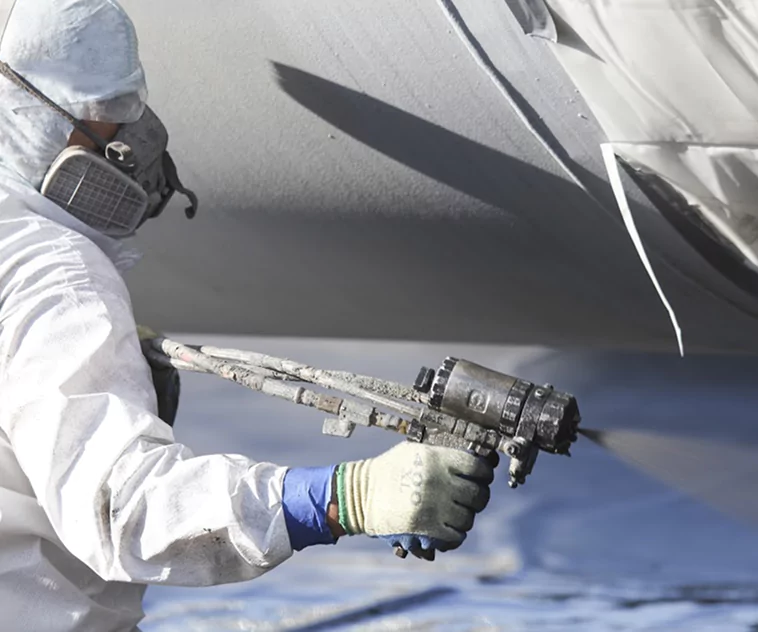
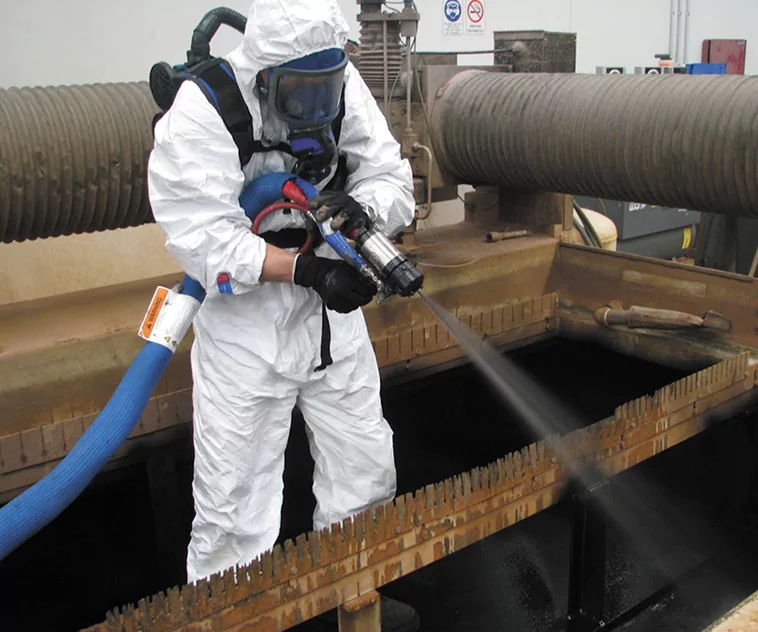
Most polyurea containment mats are built on a woven fabric or geotextile substrate. The polyurea coating is spray-applied using plural-component proportioning equipment, typically running at elevated pressures and temperatures to ensure proper mixing and adhesion.

The spray application process allows for variable coating thickness across the mat. Manufacturers can build up material at high-stress areas — corners, fold lines, seams, and grommet points — without adding unnecessary weight to the rest of the mat. That targeted reinforcement addresses the specific failure points that knock most conventional mats out of service.

Seam treatment is another area where polyurea adds value to the construction. Welded seams on containment mats have always been the most vulnerable point in the assembly. Applying polyurea over those seams adds both chemical resistance and flexibility to the joint, which reduces the likelihood of seam failure under stress or chemical exposure.

Surface preparation on the base fabric determines how well the polyurea bonds to the substrate. Proper adhesion is the foundation of the entire system — if the coating delaminates, the material properties become irrelevant. Reputable manufacturers use primer systems or mechanical bonding techniques to ensure long-term adhesion between layers.

Where Polyurea Containment Mats Are Being Used Across Canada

The applications span most of the country’s heavy industrial sectors, and the common thread is that the operating conditions demand more than basic materials can deliver.

Oil and gas. From the Montney formation in northeastern BC to the oil sands operations around Fort McMurray, polyurea containment mats are deployed under mobile equipment, around temporary fuel storage, beneath pipe racks, and at wellsite maintenance areas. The combination of extreme cold, chemical exposure, and remote locations makes material durability a priority.

Mining. Operations across Ontario, Quebec, and the territories use containment mats around fuel transfer points, chemical storage areas, and equipment maintenance bays. The abrasion and puncture resistance of polyurea holds up well in mining environments where gravel, rock, and heavy equipment are constant factors.

Utilities. Transformer oil containment is a regulatory requirement across Canadian provinces. Polyurea mats placed beneath transformers and switchgear resist the oils and fluids involved while surviving the freeze-thaw cycles that crack PVC alternatives over time.

Military and government. Canadian Forces operations and federal site remediation projects use portable containment mats for field refueling, equipment maintenance, and temporary containment during environmental work. Portability, durability, and chemical resistance are all baseline requirements in these deployments.

Regulatory Context in Canada

Spill containment requirements in Canada operate across federal and provincial jurisdictions. Environment and Climate Change Canada sets baseline standards, but provinces like Alberta, British Columbia, Saskatchewan, and Ontario each maintain their own regulatory frameworks for spill prevention and reporting.

Alberta’s Environmental Protection and Enhancement Act, for example, requires containment measures around stored chemicals and fuels. British Columbia’s Spill Reporting Regulation sets thresholds for reportable quantities across a range of substances. Ontario’s Environmental Protection Act carries its own containment and reporting obligations.

In all cases, the expectation is that containment systems actually work when they’re needed. A containment mat that fails during a spill event doesn’t just create an environmental problem — it creates a compliance problem. Regulatory bodies aren’t interested in what the mat was rated for on a product data sheet. They’re interested in whether it held when it mattered.

That’s the practical argument for investing in better containment materials. The cost of a polyurea mat is higher upfront than a PVC alternative, but the cost of a regulatory violation, a cleanup order, or an environmental remediation project dwarfs that difference entirely.

The Cost Equation for Canadian Operations

Polyurea containment mats carry a higher purchase price than commodity PVC products, and that’s a legitimate consideration for any procurement decision.

But the total cost of ownership shifts when you account for the replacement cycle. A PVC mat that cracks after two northern winters gets replaced. A polyurea mat that lasts five or six years in the same service doesn’t trigger that cycle. On remote sites where mobilization costs for any delivery are significant, reducing the frequency of mat replacement saves real money over time.

There’s also the disposal consideration. Failed containment mats that have been exposed to hydrocarbons or chemicals aren’t simple waste. Disposal requirements add cost and administrative burden every time a mat gets pulled from service. Fewer replacements means less disposal overhead.

For operations managing multiple sites across large geographic areas — which describes a significant portion of Canadian oil and gas, mining, and utility operations — the compounding effect of longer mat service life across dozens or hundreds of locations adds up to meaningful savings.

What to Ask When Evaluating a Polyurea Containment Mat

Not every mat carrying a polyurea label delivers the same level of performance. The formulation, the application process, and the substrate quality all affect the finished product.

When sourcing polyurea containment mats for Canadian use, ask about low-temperature performance specifically. Request data on flexibility and elongation at -40°C, not just at room temperature. A mat rated for impressive elongation at 23°C doesn’t help if it cracks on a January morning in Peace River.

Ask about the chemical resistance profile against the specific fluids your operation handles. Ask whether the polyurea system is aromatic or aliphatic, and understand how that distinction affects UV performance for your deployment conditions. Look at the seam construction and ask about coating thickness at fold points and high-stress areas.

Ask about field repair options as well. On remote Canadian sites, the ability to patch a mat on location rather than waiting for a replacement can make the difference between maintaining compliance and filing a spill report.

The Bottom Line

Canadian industrial operations put containment mats through conditions that most materials can’t survive for long. The temperature extremes, the chemical exposure, the UV load, and the physical abuse of constant deployment and redeployment on rough terrain — these aren’t edge cases. They’re the baseline operating conditions across much of the country’s resource sector.

Polyurea handles those conditions because the chemistry was built for exactly this kind of punishment. The flexibility stays at forty below. The chemical resistance holds through years of hydrocarbon exposure. The tear resistance keeps a small puncture from becoming a full mat failure on a site that’s three hours from the nearest supply house.

Containment mats aren’t exciting, and they shouldn’t need to be. They just need to work when it counts, and polyurea gives them the best chance of doing exactly that across the full range of Canadian field conditions.

Canadian Flood Control Polyurea

WHY POLYUREA COATINGS COULD SAVE CANADIAN FLOOD CONTROL INFRASTRUCTURE 

The dangers of climate change are often discussed as if they only exist in the distant future, but in reality climate change is a gradual process that’s already begun, and Canada is not immune. 

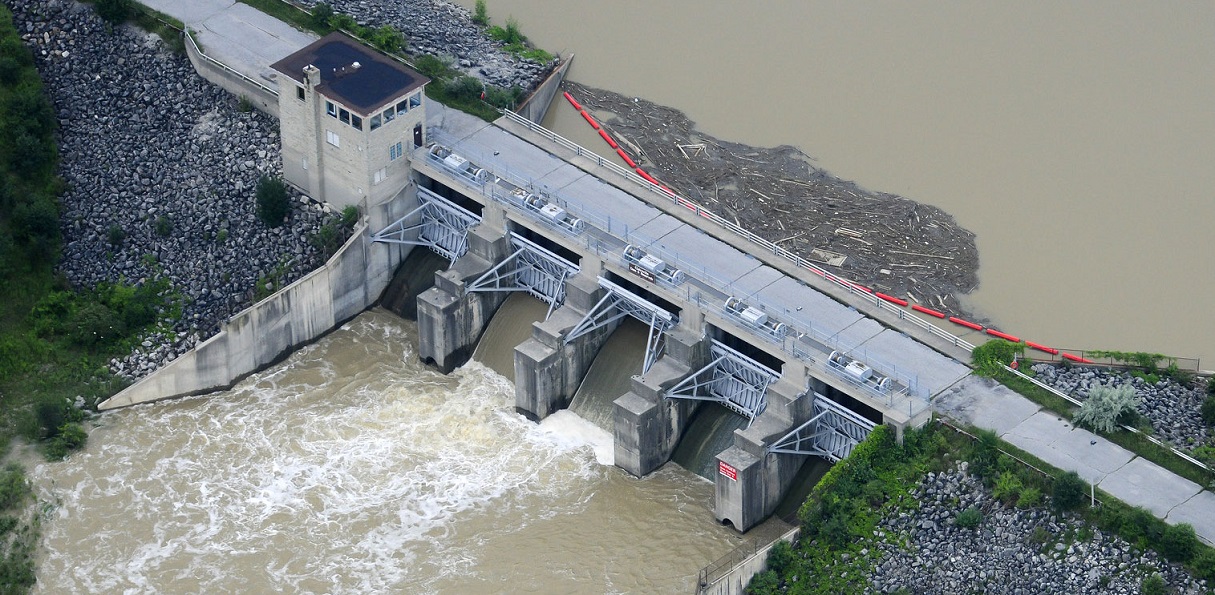
Canadians have surely noticed weather is becoming more chaotic with each passing year. As Canada continues to break precipitation records, flood control infrastructure that was built for calmer storms is unprepared. While the world tries to combat climate change at the source, even the most optimistic projections reveal that Canadian flood control infrastructure needs a major overhaul if people and property are to survive the battle that is to come over the next few decades. But, demolishing and rebuilding miles of reinforced concrete is neither fiscally nor environmentally realistic for Canadians and their municipalities. Instead, engineers can turn to spray‑applied polyurea flood wall coatings; thin and seamless membranes that can be installed quickly and cost-effectively and add decades of service life to critical flood‑control works.

WHAT ARE POLYUREA FLOOD CONTROL COATINGS AND WHY DO THEY MAKE ALL THE DIFFERENCE?

Polyurea is a two‑component, 100%‑solids elastomer that reacts instantaneously as it’s ejected from high-pressure spray equipment. Its gel time is on the order of seconds and full cure finishes far faster than competing materials technologies, so return to lifesaving service is as fast as possible. One of many of polyurea’s strengths is that it forms a monolithic film that is free of pinholes or cold joints, making it a single, powerful impermeable barrier. Once polyurea cures, the membrane is both hydrophobic and impermeable, reliably resisting hydrostatic pressures that would otherwise force water through cement paste or construction joints. Polyurea also exhibits an order‑of‑magnitude gain in wear resistance compared with bare concrete, which is an especially important metric when high‑velocity floodwater is loaded with angular sediment.

SPEED AND DURABILITY WITH THE ULTIMATE IMPERMEABILITY

Concrete floodwalls are required to withstand intense and prolonged physical and chemical stress, which is why polyurea’s tensile profile is invaluable. Polyurea films stretch over working cracks without tearing or delaminating, and this same ductility lets the lining move with sheet‑piles or precast panels in modular flood‑gate systems that are assembled and disassembled seasonally. But in many cases, the decisive factor is not strength, but speed; crews armed with a modern rig can rehabilitate 100–150 m2 of wall in a single shift, even when the substrate is still damp from moisture-laden treatments. The surface also becomes foot‑traffic‑ready in hours or even days faster than with polyurea’s alternatives, and can withstand re‑pressurization of a pump sump or canal within just a single tide cycle. This is an impossible schedule for traditional epoxy, cementitious, or HDPE‑sheet systems, so polyurea is the uncontested choice for “just‑in‑time” interventions.

MULTI-LAYER, MULTI-LEVEL SAFETY

The problems that polyurea floodwall coatings seek to solve are a consequence of climate change, so it’s essential that one environmental issue isn’t replaced by another. With polyurea coatings, this is not the case, especially when compared to pouring several meters of fresh concrete. A typical ~2 mm layer of polyurea adds less than 2 kg CO2-e per m2, which is roughly one tenth the carbon footprint associated with a concrete overlay. At the same time polyurea also imparts robust durability well beyond what can be expected of normal concrete so infrastructure better withstands physical and chemical stress, thereby saving increasingly scarce or expensive resources. And while inherently safer considering its application to control dangerous floodwaters, polyurea additionally promotes safety through the incorporation of high‑visibility flood‑stage markings in lieu of using separate signage that would fade or delaminate sooner.

CHOOSE POLYUREA SPRAY-APPLIED COATINGS FOR CANADIAN FLOOD CONTROL INFRASTRUCTURE PROJECTS

Canadian flood‑control infrastructure has to contend not just with more water, but shorter warning times and tighter budgets. Unfortunately these conditions aren’t expected to dissipate any time soon, but the good news is that by delivering a fast‑curing, crack‑bridging, chemically inert membrane, polyurea flood wall coatings allow stakeholders to rehabilitate existing structures instead of replacing them, thereby enjoying the same extension in service life, improved resilience, and satisfaction of modern sustainability targets with minimal disruption. Municipalities weighing the cost of another concrete pour against the certainty of the next river from above can use spray‑applied polyurea to provide a high‑performance retrofit that is ready today and prepared for the future, no matter how chaotic or uncertain, which is about all that’s guaranteed. 

Cover_WEB_OriginalSize

The Growing Pressure from Climate Events on Canadian Infrastructure

In many parts of Canada, the climate has shifted in ways that have surprised even long-time residents. In recent months, news reports have shown images of streets turned into rivers, highways swallowed by water, and bridges closed due to sudden flooding or ice damage. These stories no longer feel unusual. Across provinces, communities now face climate events that move faster, last longer, and leave behind greater damage than before.

Infrastructure stands at the center of these challenges. Roads, tunnels, bridges, and parking decks all carry the burden of weather extremes that strike with increasing force. The past few years have revealed a troubling pattern where systems built decades ago begin to fail under conditions they were never designed to endure. Heavy rainfall overwhelms drainage networks (View Video).

Freeze-thaw cycles split apart roadways and concrete foundations. Once water finds its way inside, it rarely stays still. It spreads through cracks, weakening structures in ways that often go unnoticed until damage becomes visible—and expensive.

Recent floods in Quebec and British Columbia have sparked national discussions about how Canada must adapt its infrastructure. Engineers and city officials have called for stronger protections that go beyond short-term fixes. The goal, as many now describe it, is to build systems that do not merely survive today’s climate, but also remain reliable for decades to come.


Polyurea’s Expanding Role in Infrastructure Protection

Among the methods that have gained ground during these discussions, polyurea has emerged as a practical tool for safeguarding structures from water, corrosion, and physical wear. Originally developed for industrial uses, polyurea now plays a central role in public projects that need long-lasting resilience.

Polyurea’s strength lies in its ability to form a seamless, flexible barrier that holds up under heavy use and harsh weather. Once applied, it bonds tightly to surfaces such as concrete, steel, and wood. This bond creates a continuous layer that blocks water from entering cracks or joints. Unlike traditional sealants, polyurea does not rely on seams or adhesives that might fail after repeated exposure to rain, snow, or shifting temperatures.

Canadian engineers have started using polyurea coatings in a range of projects, from bridge decks and parking garages to tunnel linings and water containment areas. These coatings work because they handle more than water. They also resist chemicals found in de-icing salts and urban runoff, which can erode untreated surfaces over time.

One reason polyurea has gained such strong support from infrastructure experts involves its speed of application. In places where construction timelines remain tight, polyurea’s fast curing process allows projects to move forward without long delays. Workers apply the coating, and within minutes, it forms a durable shield ready for use. This quality proves essential for cities that need to repair critical systems without closing roads or public areas for extended periods.


How Canadian Infrastructure Faces Unique Risks

Canada’s climate adds further urgency to these developments. In colder regions, infrastructure must withstand not only rain but also long periods of freezing temperatures followed by sudden thaws. This freeze-thaw cycle places extreme stress on surfaces, as water expands and contracts within small gaps and pores. Over time, the repeated movement breaks down materials and opens new paths for water to enter.

Polyurea addresses this risk by remaining flexible even in low temperatures. When applied correctly, it stretches with the surface rather than cracking or pulling apart. In this way, it protects both the exterior and interior layers of infrastructure, reducing the chance of hidden damage that can spread unseen.

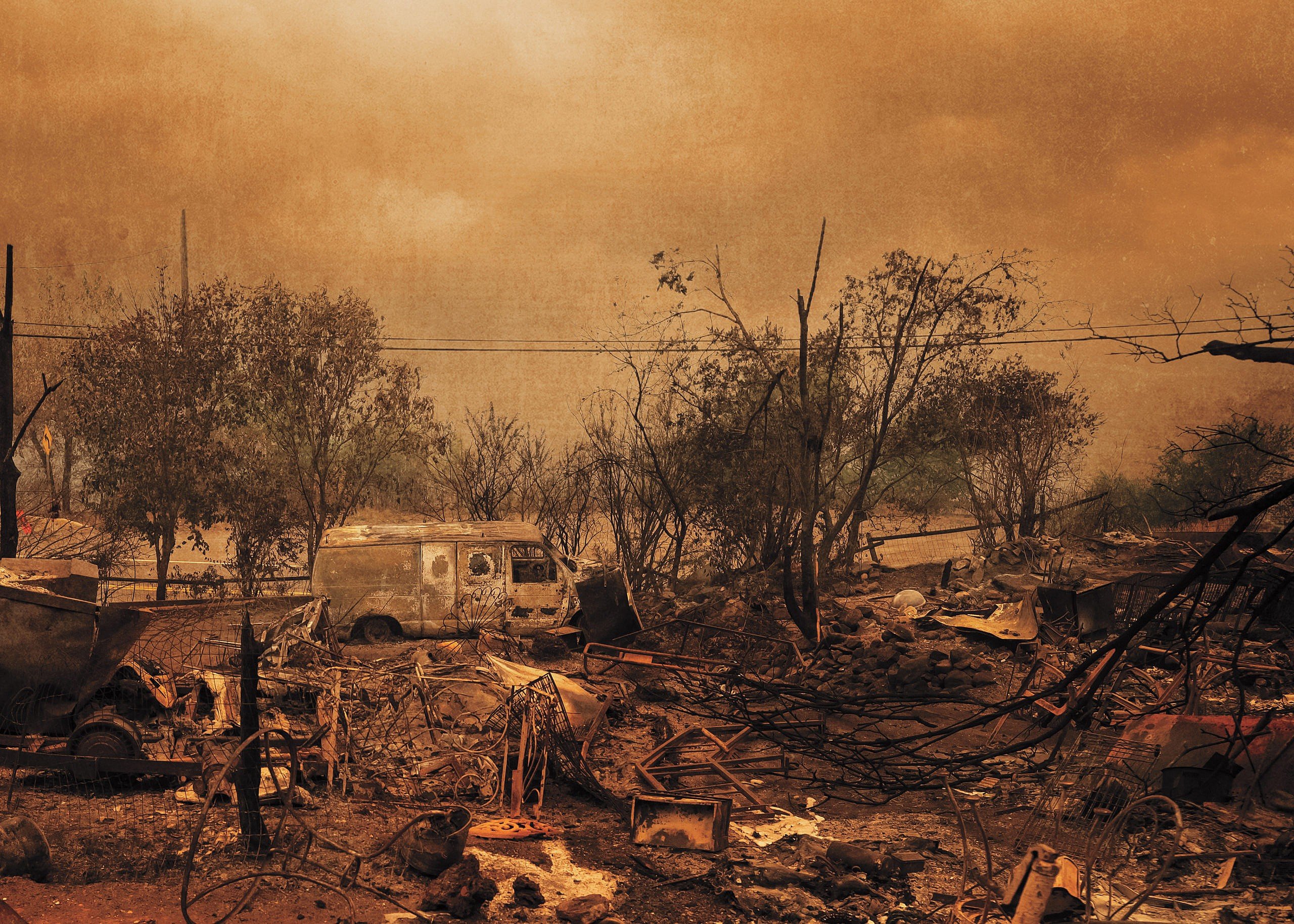
Recent reports have also highlighted wildfire damage in western Canada. These fires, aside from their immediate destruction, often leave infrastructure vulnerable to erosion and water damage once rains return. In such cases, polyurea coatings have been used to protect exposed surfaces, preventing post-fire deterioration that would otherwise weaken structures already strained by heat.

Urban environments face their own challenges. Cities across Canada have seen aging concrete parking structures and pedestrian overpasses deteriorate under the combined effects of vehicle traffic, moisture, and de-icing chemicals. Polyurea has shown strong results in these situations as well, with coatings that not only stop water from entering but also reduce future maintenance needs.


The Broader Shift Toward Resilience and Longevity

What has become clear through these developments is that infrastructure planning now follows a different path than it did just a generation ago. The focus has shifted from building for average conditions to building for extremes. Engineers no longer ask whether a structure can survive typical weather patterns. Instead, they ask whether it can endure the worst-case scenarios that are becoming more common each year.

Polyurea fits into this new mindset not because it offers a quick fix, but because it provides long-term reliability in situations where failure carries serious consequences. Its ability to prevent water infiltration, resist chemical damage, and withstand physical stress makes it well suited for projects where durability cannot be compromised.

In interviews with project managers working on flood-prone infrastructure, many describe polyurea as part of a broader strategy that includes stronger foundations, better drainage systems, and advanced monitoring technologies. By combining these approaches, Canadian cities and towns aim to create systems that serve their communities for decades, rather than requiring constant repairs after every storm.


A New Understanding of Infrastructure’s Role

The national conversation surrounding infrastructure protection reflects more than just technical concerns. In many ways, it highlights how closely connected infrastructure has become to everyday life. When roads flood, people lose access to work, schools, and essential services. When bridges close, entire regions face delays in emergency response and supply deliveries. In these moments, infrastructure proves itself not as a background system, but as a lifeline that holds communities together.

By investing in technologies such as polyurea, cities send a message that they recognize these risks and intend to meet them with lasting solutions. The coatings applied today may seem like a small detail, yet they form part of a larger effort to adapt Canada’s built environment to a world where uncertainty has become the norm.

As provinces continue to recover from recent floods and fires, and as new projects begin across the country, the role of materials like polyurea will likely grow. Their success does not come from promises of perfection, but from their proven ability to extend the life of essential infrastructure, keeping it safe and functional in the face of rising challenges. In this way, polyurea has become not only a tool for engineers, but also a quiet safeguard for communities across Canada.

ArmorThane Cistern Liner Solution

Sealing Every Drop: Why Polyurea Is Becoming the Go-To Liner for Modern Cisterns

The Shrinking Margin for Water Loss

Across drought-stricken hillsides of the southern prairies, Caribbean resorts in Vancouver, and sprawling farm belts in the Prairie Provinces, water-storage failures are no longer rare mishaps, they are operations-critical events. Aging concrete vaults leach chloride ions that rust rebar, steel bolted tanks develop seam leaks, and roll-on epoxies chalk or crack after a few freeze–thaw seasons. As regulators tighten leakage limits and insurers push “zero-loss” targets, asset owners are seeking lining systems that install quickly, seal permanently, and never compromise water quality. These pressures have placed spray-applied polyurea squarely at the center of the cistern conversation.

Polyurea Chemistry Meets Cistern Demands

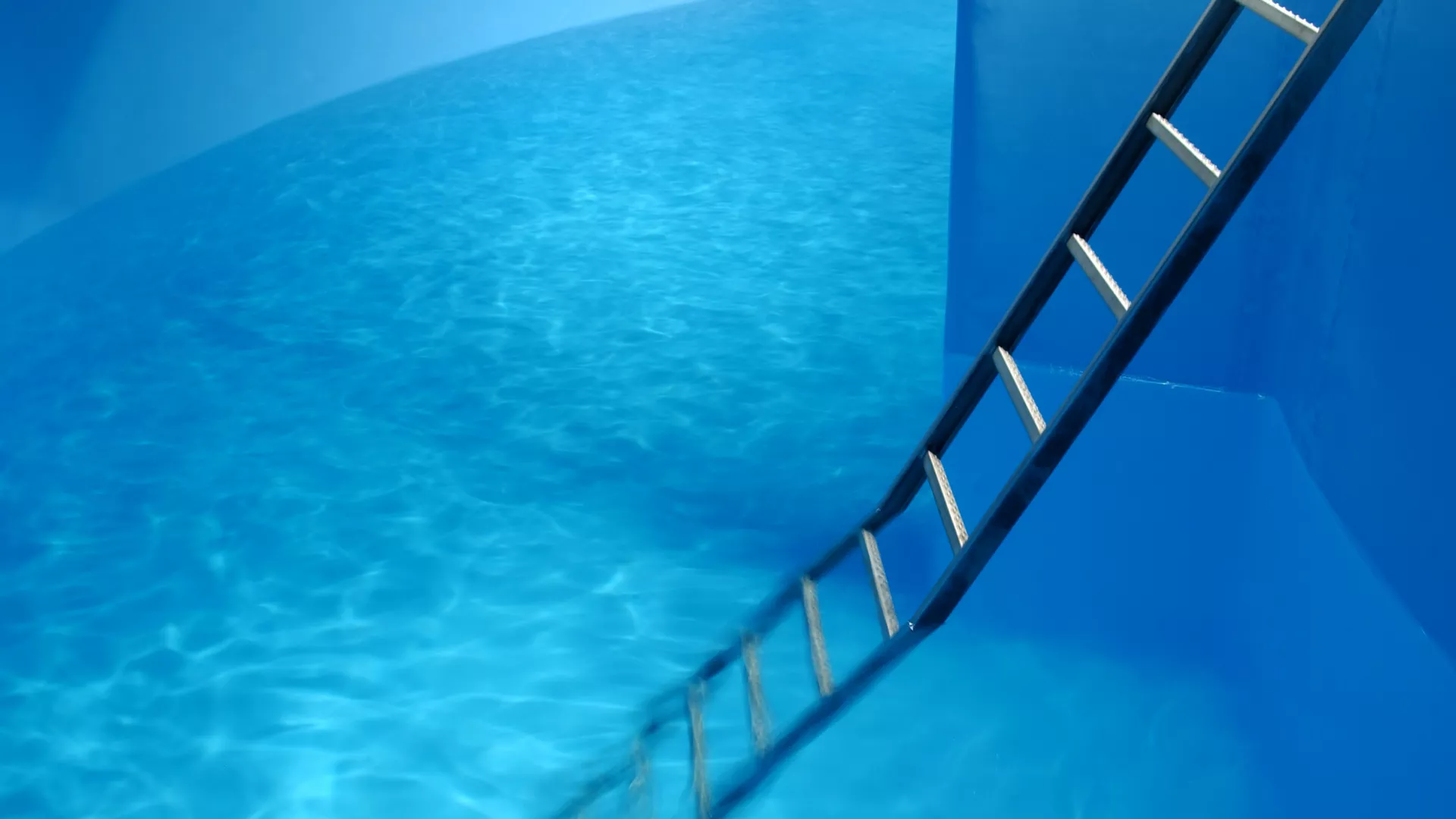
Polyurea’s appeal begins at the molecular level. Two heated liquid components, an isocyanate and an amine-terminated resin, travel through separate fluid paths and atomize together only inside the spray gun’s mixing chamber. Reaction happens in milliseconds; the coating hits the wall as a gel and becomes tack-free in seconds. This hyper-fast polymerization produces a seamless elastomer whose elongation can exceed 300 %, yet whose tear strength rivals high-grade rubber. Just as important for cistern service, properly formulated polyurea is hydrolytically stable and can pass stringent potable-water extraction tests such as NSF/ANSI 61. For both concrete and steel substrates the coating functions as an impermeable, chemically inert bladder that flexes with settlement, vibration, or temperature swings instead of cracking like brittle epoxies or unzipping like welded membranes.

Performance Differentiators in the Field

Comparison tests tell a clear story. Where a two-part epoxy may require 12–48 hours before refilling, a polyurea-lined cistern often returns to service the same day, critical for rain-harvesting systems that must capture the next storm event or processing plants that cannot interrupt shift schedules. In hydrostatic pull-off experiments, polyurea routinely maintains strong adhesion even after countless freeze–thaw cycles, while flexible PVC liners show edge creep and blistering well before. Field crews report similar results: municipal utilities routinely document a significant reduction in annual liner maintenance hours after switching to spray polyurea, largely because inspectors could no longer find pinholes or joint failures. Lower life-cycle repair costs, along with the absence of seams where bacteria can colonize, give polyurea a compelling total-ownership advantage.

Market Momentum and Business Prospects

Across residential, agricultural, and industrial markets, demand for reliable cistern linings is expanding as owners grapple with drought‐driven regulations, aging infrastructure, and rising expectations for water stewardship. When authorities encourage rain harvesting, farms insulate themselves against erratic irrigation supply, or factories commit to closed-loop process water, each new tank or retrofit represents a fresh coating opportunity. Polyurea’s ability to go in fast, seal permanently, and keep maintenance costs predictable positions coating contractors to capture that work without radically retooling their businesses. Firms already familiar with plural-component spray equipment can add cistern liner projects with modest investment, while entrepreneurs see an approachable entry point into the protective-coatings industry, one where quality counts more than commoditized square-foot pricing.

Execution Essentials: From Prep to QC

Still, polyurea is not a spray-and-pray miracle. Moisture content below roughly 5 % in concrete, standardized cleanliness for steel, and appropriate substrate temperatures remain non-negotiable. Plural-component proportioners must maintain a balanced 1:1 volume ratio and component temperatures within a two-degree window to avoid off-ratio cure. Holiday detection with low-voltage wet sponge or high-voltage spark tests verifies continuity, while adhesion pull-tests confirm the bond before potable water certification. Manufacturer-led training pathways help new entrants master these details, and third-party inspector programs now include polyurea-specific modules, evidence that the technique is maturing into a mainstream standard rather than a niche specialty.

Looking Ahead: Polyurea’s Role in Water Resilience

Polyurea technology is evolving on several fronts that matter to cistern performance. Formulators continue to enhance UV-stability packages, helping aromatic systems resist chalking and color shift in partially translucent or open-top reservoirs. Advances in amine chemistry are lowering cure exotherm and broadening the application temperature window, allowing crews to work through wider seasonal swings. On the job-site side, incremental automation, from more intuitive proportioner controls to guided spray patterns, reduces operator error and promotes consistent film build. As these improvements reach the market, they reinforce polyurea’s core value proposition: a fast, durable, and food-safe barrier that helps water managers safeguard every stored gallon with confidence.

Applicator-trowel-manhole-lining-s-w_SmartCropSixteenToNine

What Lies Beneath: The Future of Manhole Linings in Canada

Canadian cities rely on buried systems that keep daily life moving. Beneath roads and sidewalks, manholes offer access to wastewater and stormwater networks. These structures support inspection, cleaning, and repair. But over time, their walls break down. Moisture, gas, and freeze-thaw cycles wear away the concrete. Left unprotected, manholes leak, collapse, or contribute to surface failures. To extend their lifespan, municipalities now turn to better manhole lining methods.

Older practices involved patching with cement or installing liners made from plastic or fiberglass. These methods worked for a while but failed to protect against modern threats—corrosive gases, groundwater infiltration, and extreme weather shifts. Today, engineers and public works teams look to coatings. Among them, polyurea has emerged as a top performer.

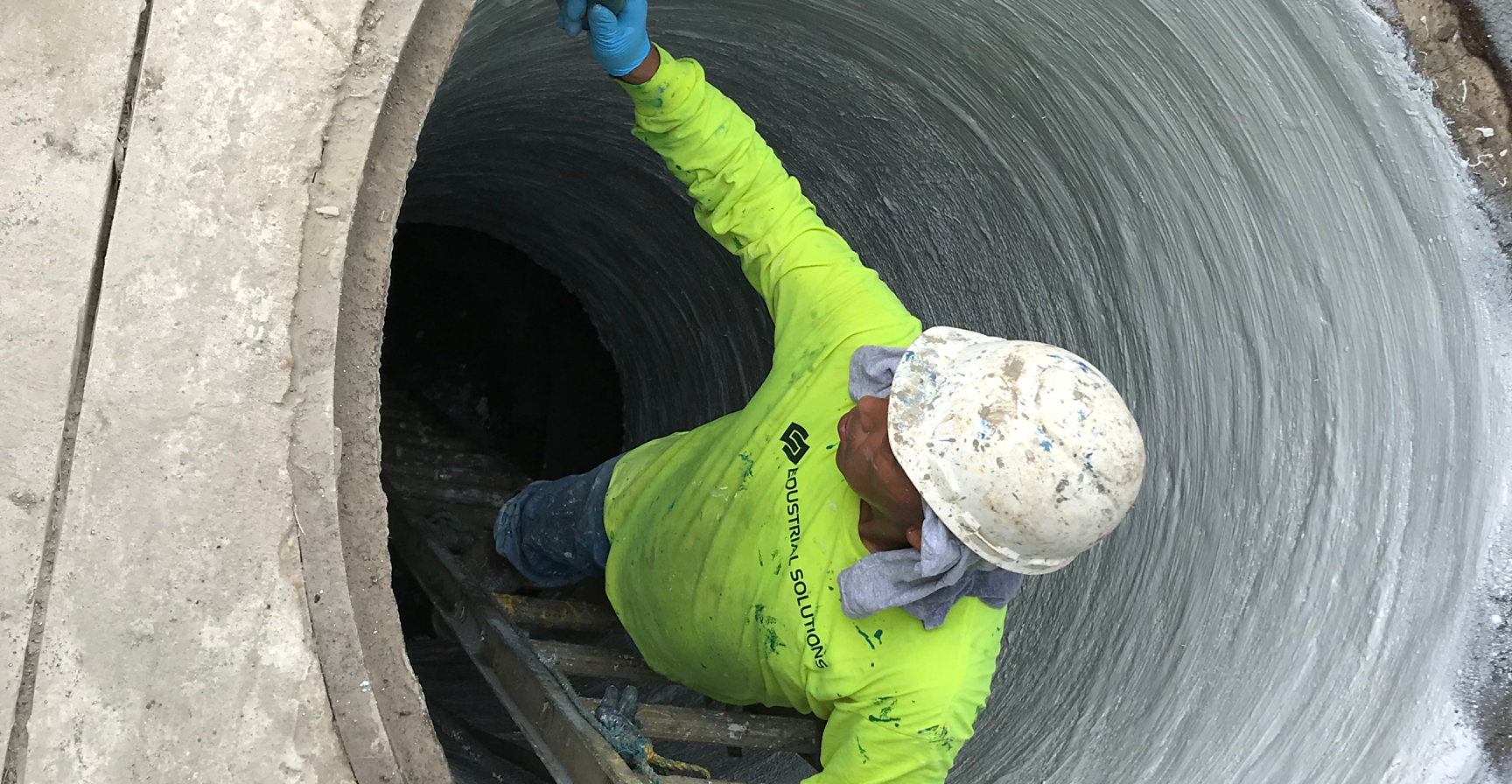
Polyurea works because it cures quickly, adheres tightly, and resists stress. It handles the expansion and contraction that winter temperatures cause. It blocks chemical attack and water intrusion. When sprayed inside a prepared manhole, it forms a seamless protective layer. For cities facing aging infrastructure and growing budgets, that performance matters.

Across Canada, municipalities weigh the cost of contracting manhole repairs. Outside crews charge for mobilization, equipment, and downtime. Some cities, especially those with large networks or remote sites, now bring the work in-house. These public works departments train their staff and purchase spray equipment to handle manhole rehabilitation themselves.

When municipalities spray their own manholes, they gain direct control. They decide when and where to act. They reduce repair delays. They manage quality from start to finish. With modern polyurea spray rigs, local teams can travel across cities, towns, and even northern communities where weather shortens work seasons.

That shift reflects a broader trend in Canadian infrastructure: do more with less, and make it last longer. Many sewer systems in Canada date back to the 1950s and ’60s. Their manholes show clear signs of aging. Cracks spread. Groundwater leaks in. Sewage escapes into soils. Each of those failures increases treatment costs and threatens the environment.

A proper manhole lining prevents those failures. Polyurea lines every inch of the internal surface. It bonds to irregular contours and covers seams. Once cured, it blocks inflow, stops corrosion, and resists freeze-thaw damage. That reliability turns a failing manhole into a long-term asset.

Application techniques continue to evolve. Spray equipment now offers greater control over pressure and temperature. New systems ensure consistent mix ratios. Some rigs include sensors that monitor coating thickness in real time. These tools help public works teams apply polyurea correctly the first time.

Surface preparation still plays a key role. Crews remove debris, roots, and damaged material before spraying. Without proper prep, even a strong coating will fail. But when done right, polyurea bonds instantly and cures within seconds. That speed keeps traffic disruptions low and repair cycles short.

In the future, we may see more automation in these systems. Robotic nozzles could enter confined spaces and coat surfaces with little manual effort. Inspection tools may scan linings using thermal or ultrasonic imaging. As Canada modernizes its water infrastructure, these tools may become standard.

Polyurea also fits Canada’s push toward resilience. As climate change increases rainfall intensity and flood risks, manholes must hold firm under pressure. Linings help prevent sewer surcharges and reduce system inflow. That keeps treatment plants from being overwhelmed and helps cities meet environmental goals.

Training remains essential. Cities that build their own coating teams must invest in education. Crews need to understand spray methods, equipment operation, and material behavior. They must know how to inspect linings and assess repairs over time. With that training, polyurea becomes not just a material—but a strategy.

The chemistry itself will likely improve. Polyurea already performs well, but researchers continue to test blends that handle colder climates, cure under moisture, or bond better to older concrete. These improvements will give Canadian municipalities more tools to meet their unique challenges.

Coatings must work as part of a full system. Manhole success depends not only on linings but also on frame repairs, grade rings, and joint sealing. Polyurea addresses the inner walls. Other steps ensure the rest holds up. A complete approach reduces long-term costs and limits future failures.

As more municipalities choose to rehabilitate rather than replace, polyurea will continue to grow in use. The material delivers strength and flexibility in one step. It avoids excavation. It keeps roads open. It meets performance demands without added stress on local crews.

While the public rarely thinks about what lies below, lined manholes play a critical role in protecting streets, streams, and groundwater. They keep wastewater in the system and shield the infrastructure from corrosion. With polyurea, Canada can strengthen that line of defense.

The future of manhole lining in Canada will depend on smart choices. Cities that adopt reliable coatings, train local teams, and invest in durable equipment will stay ahead. Whether by partnering with contractors or shifting work in-house, success depends on quality materials and preparation.

Canada’s underground infrastructure will continue to age. But with polyurea, cities can give their manholes new life—without rebuilding from scratch. The next generation of manhole care will happen one spray at a time, guided by data, driven by durability, and carried out by teams that know how to protect what can’t be seen.

freepik__retouch__71770

Concrete Rehabilitation With Polyurea: A Modern Approach to Longevity

The construction industry depends on concrete as its fundamental foundational material. The infrastructure structures of roads, bridges, tunnels, and buildings depend fundamentally on their tensile strength. The material becomes brittle due to exposure to moisture, chemicals, and temperature variations.

The structure suffers from failure when no intervention occurs before the situation progresses to costly repair requirements or total replacement needs. Polyurea coatings present an effective solution that restores structural integrity and prolongs the system’s lifetime before stopping future deterioration. The breakdown of concrete structures generates extensive damage to infrastructure systems.

While concrete looks sturdy, it naturally attracts moisture. The concrete’s porous structure allows water, dissolved salts, and chemicals to penetrate its holes. Freeze-thaw cycles grow more frequently in cold weather conditions, leading to additional infrastructure damage. The freezing water within the material expands, causing its width to increase and further widening existing cracks. The moisture-reaching steel reinforcement triggers its corrosion process to begin. The expansion of rust presses down on the adjacent concrete, generating spalling and reducing structural strength. The deterioration process speeds up when concrete systems come into contact with chemicals. Industrial facilities, wastewater plants, and bridges experience continuous exposure to corrosive substances. The cement matrix material breaks down into manageable pieces when concrete surfaces come into contact with acids and oils and de-icing salts. Concrete surfaces will continue to deteriorate without protection, needing more regular repairs that affect operational productivity.

Polyurea Coatings Extend the Service Life and Intensify the Durability of Concrete Restoration Jobs.

The current repair strategies include applying bandages to cracks, using sealants, and adding additional structural layers. The functional restoration provides no long-term protection against future degradation.

Polyurea coatings represent an alternative solution

Polyurea comes in spray form, creating a continuous, flexible barrier that directly bonds with concrete substrates. The flexible sealant outperforms traditional rigid sealants because it elongates with structural movement to prevent fresh crack development.

Polyurea shows exceptional water resistance, which proves beneficial for concrete restoration work in areas with high moisture presence. Polyurea exhibits instant setting characteristics that surpass epoxy coatings that require prolonged curing times. Facilities can resume operations more quickly because of this fast curing process, which reduces downtime. Polyurea coatings provide durable protection against acids solvents and industrial fluids; otherwise, compatibility issues would occur with conventional coatings.

Application of Polyurea on Damaged Structures.

The application of polyurea starts with site preparation for better adhesion. The service includes concrete chipping for removal, total surface cleaning and crack repair. Polyurea spray applications create a uniform coating that covers all structural details. The instant bond forms a barrier that protects against moisture penetration through the concrete pores. Polyurea conforms to irregular shapes to protect corners, extension joints, and exposed rebar without establishing vulnerable areas. This approach extends beyond industrial settings. Polyurea serves roadways and airfields alongside bridges parking decks and seaside structures by providing water exclusion and erosion protection against impact damage. The extended service life gained from protective coatings enables older structures to continue operational use rather than requiring expensive replacement.

Future Development Strategies for Concrete Repair and Maintenance

Since existing infrastructure continues to age, implementing lasting solutions announces itself as a priority need. Polyurea coatings lead infrastructure restoration practices toward a forward-thinking maintenance approach away from traditional repair actions. Their ability to restore and reinforce concrete makes them valuable in maintaining critical structures. The ongoing development of coating technologies will keep polyurea relevant for extending service life and decreasing maintenance expenses for concrete substrates.

Gama-application

Polyurea vs. Cementitious Coatings: A Comparison of Strength and Versatility

In the realm of coatings, both polyurea and cementitious materials provide solutions, for shielding structures from physical harm. Each material possesses characteristics that render it appropriate for purposes. Having a grasp of the disparities between polyurea and cementitious coatings can assist professionals in selecting the option for their requirements. This piece delves into the strengths and attributes of each material offering insights into when to opt for polyurea versus when cementitious coatings might be more favorable.

Unraveling Polyurea

Polyurea is an elastomer formed through a chemical reaction between an isocyanate component and an amine resin. This reaction yields a polymer that solidifies rapidly creating a pliable coating. The quick curing process enables application making polyurea well suited for projects with time constraints. Once fully cured polyurea forms a watertight shield that shields surfaces from environmental pressures.

The flexibility of polyurea stands out as one of its attributes. Unlike coatings, polyurea can. Compress without fracturing making it appropriate for surfaces subject to movement or changes in size. This adaptability proves beneficial in settings to temperature fluctuations or mechanical strains, such as rooftops, bridges or industrial flooring.

Moreover aside from its flexibility polyurea boasts resistance, against water infiltration, chemicals and abrasive forces. These characteristics make it a popular option, for situations where the coating must endure conditions like in settings, wastewater treatment facilities or heavy duty industrial environments.

Understanding Cement Based Coatings


Cement based coatings are what their name indicates – coatings created from a blend of cement, water and different additives. They are applied as a slurry that solidifies into a lasting layer. For centuries cement based materials have been utilized to safeguard and reinforce structures and continue to be favored for uses today.

Cement based coatings are recognized for their durability and stiffness. Once they set they create a watertight layer that offers protection against physical impacts and environmental elements. This property makes them well suited for surfaces requiring resistance to wear and tear, such as walls, floors and foundations.

The inherent robustness of cement based coatings also grants them fire and heat resistance capabilities. This quality deems them suitable for situations where fire resilience’s crucially important – like in tunnels or industrial sites.

Comparison Between Polyurea and Cement Based Coatings
When deciding between polyurea and cement based coatings various factors need to be taken into account such, as flexibility curing time, environmental endurance and the specific conditions of the application site.
Polyurea is often preferred for projects that require curing and flexibility as it can adapt rapidly to conditions. Its ability to endure environments and resist chemicals and water makes it an excellent choice, for marine protective applications.

On the hand cementitious coatings are best suited for situations that demand hardness and lasting durability. Their slower curing process allows for application, which’s crucial for achieving a smooth and uniform coating. The strength of coatings lies in their capacity to create a resilient surface that can withstand physical impacts and environmental stressors making them ideal for safeguarding concrete structures, foundations and surfaces subject to heavy use or loads.

Although both materials offer protection, their distinct characteristics make them suitable for applications. Polyurea excels, in speed and flexibility ensuring reliability in demanding environments where the coating must endure levels of stress. Cementitious coatings stand out for their toughness and longevity delivering a finish that performs well in environments to wear and exposure.

Deciding on the Appropriate Coating

The choice of coating material depends on the requirements of each project.
If you need a coating that can quickly be applied and adapt to surface movement polyurea is your bet. This is especially important, in industries like construction or infrastructure where surfaces undergo changes and downtime should be minimized.

On the hand if you require a coating with a durable impermeable finish cementitious coatings might be more suitable. This is particularly crucial in settings where the coating needs to endure use, impacts or fire exposure such as floors or tunnels.

Polyurea and cementitious coatings protect various surfaces. By understanding their qualities, professionals can select the material for each job to ensure optimal performance under specific conditions.

In conclusion both polyurea and cementitious coatings are choices for coatings with their own strengths depending on the application. Polyureas quick curing time, flexibility and resilience in environments make it perfect, for marine uses.
The strength of coatings lies in their durability, hardness and ability to create a impermeable finish making them a reliable option, for concrete structures, foundations and surfaces that require lasting protection against physical wear and environmental elements.

Professionals can enhance their decision making by understanding the distinctions between these materials. This knowledge enables them to achieve outcomes and ensure safeguarding for the surfaces they protect. Whether prioritizing speed and adaptability with polyurea or prioritizing toughness and resilience with coatings choosing the appropriate coating guarantees project success by delivering the protection and performance, in challenging conditions.

Epoxy,Flooring,Applicator,Performs,Painting,Works,With,Polyurethane,Epoxy,Mortar

Polyurea vs. Epoxy: Choosing the Right Coating for Your Needs

Regarding coatings, polyurea and epoxy (polyurea vs epoxy) stand out as two commonly used options. While both materials offer protection for surfaces, they have properties and applications. Understanding the variances between polyurea and epoxy can assist you in choosing the coating for your requirements. This piece delves into the strengths and limitations of each, shedding light on when polyurea might be preferred over epoxy and vice versa.

Polyurea Fundamentals

An isocyanate component and an amine resin react to form polyurea, a type of elastomer. This reaction occurs swiftly, resulting in a polymer that cures within seconds. The rapid reaction time is an advantage of polyurea, allowing for application and minimal downtime. Once applied, polyurea creates a coating that can endure environmental and mechanical pressures.

The flexibility of polyurea makes it well-suited for surfaces to move, expansion or contract. This includes applications such as roofing where fluctuations in temperature can lead to material shifts or in environments where equipment and surfaces may experience vibrations or flexing. The quick curing process of polyurea also makes it a practical option for projects, with timelines since the coated surface can be swiftly put back into use after application.
Polyurea offers a benefit, in its ability to withstand water, chemicals and abrasion making it ideal for surfaces facing conditions like those found in marine settings, wastewater treatment facilities and heavy machinery environments.

Understanding Epoxy

Epoxy is a thermosetting polymer that results from the chemical reaction between epoxy resin and an amine, a hardening agent. Unlike polyurea, epoxy requires hours to cure, allowing more time for application. Epoxy coatings are recognized for their toughness and strong adherence, delivering a finish that resists wear and impact.

The slower epoxy curing process can be advantageous in scenarios requiring precision and consistency. The extended application period permits coating application for coverage. Epoxy is commonly utilized in locations demanding durability and chemical resistance such as garage floors, industrial facilities and commercial areas.

Due to its firmness compared to polyureas flexibility epoxy may not be suitable for surfaces to movement or shifting. Nonetheless this stiffness grants resilience against abrasion and chemical exposure – making epoxy the option, for areas subjected to heavy usage or harsh substances.
When deciding between polyurea and epoxy various factors come into play such, as curing time, flexibility, durability and the specific conditions of the application environment. Polyurea is preferred for projects that require curing and flexibility. It can withstand conditions. Is resistant to chemicals and water making it ideal for industrial and marine protective applications.

On the hand epoxy is best suited for applications that demand a durable finish. Its slower curing time allows for application resulting in a coating. Epoxy excels in hardness, impact resistance and abrasion resistance making it suitable for high traffic areas and surfaces subjected to use.

While both materials offer protection, their unique characteristics make them suitable for applications. Polyurea’s strengths lie in speed and adaptability, making it reliable in demanding environments where performance under pressure is crucial. Epoxy stands out for its toughness and durability, providing a finish that performs well in environments requiring resistance to wear and chemicals.
Selecting the coating material hinges on the project’s requirements. If speed of application and curing are priorities, along with the need for a coating that can move with the surface, polyurea is likely the optimal choice. This holds true in industries like construction or infrastructure, where surfaces may undergo expansion, contraction, or movement and where minimizing downtime is crucial.

On the hand if a project calls for a coating that combines hardness with a smooth finish epoxy might be the more suitable option. This is especially important in settings where the coating must endure foot traffic, impacts or exposure to chemicals – such as floors, commercial areas or garage floors.

Both polyurea and epoxy are materials known for providing protection to various surfaces. Having a grasp of their characteristics empowers professionals to select the right material for each specific application ensuring that the coated surface performs effectively under its expected conditions.

In conclusion

Polyurea and epoxy stand out as protective coatings in todays market. Each offers benefits depending on the intended use. Polyureas quick curing time, flexibility and resistance to environments make it an excellent choice, for marine applications.
Epoxy is valued for its strength due, to its nature and ability to create a smooth and consistent finish making it a popular option for floors and surfaces needing lasting defense against wear and chemicals.

Professionals can achieve outcomes. Ensure prolonged protection for the surfaces they are preserving by recognizing the distinctions between these materials. Whether prioritizing speed and flexibility with polyurea or opting for the resilience and accuracy of epoxy selecting the coating is crucial for achieving success in projects offering the safeguarding and performance, in even the most challenging conditions.

POLYRESYST-polyurea_30-11-21

Polyurea vs. Polyurethane: Understanding the Differences

Polyurea and polyurethane are used coatings, each with distinct properties and uses. While both offer surface protection, their unique traits cater to specific purposes. Knowing the variances between polyurea and polyurethane aids professionals in selecting the material for their requirements. This article delves into the disparities between these coatings, emphasizing their strengths and the scenarios in which they excel.

Overview of Polyurea

Polyurea is an elastomer formed by combining an isocyanate component with an amine-terminated resin through a chemical reaction that results in a polymer curing within seconds. This quick curing process is a defining characteristic of polyurea, enabling it to create a coating that solidifies rapidly and can be utilized shortly after application.

The swift curing nature of polyurea makes it advantageous for projects where downtime must be minimized. It also permits application in conditions such as high humidity or low temperatures, where other coatings may face challenges in proper curing. Additionally, polyurea’s flexibility is a benefit, as it can stretch and contract without fracturing, making it suitable for surfaces that move or expand, like pipelines, roofs, and industrial floors.
Polyurea is well known for its ability to resist water, chemicals, and wear. These characteristics make it a preferred option for use in situations where the coated surface is exposed to challenging conditions, such as in settings, wastewater treatment facilities, and heavy-duty machinery.

Understanding Polyurethane

Similar to polyurea, polyurethane is a polymer commonly used as a coating. It is produced by combining an isocyanate with a polyol. Although the chemical process resembles that of polyurea, the resulting material possesses properties. Polyurethane typically cures at a slower pace than polyurea, which requires hours to achieve maximum strength. This slower curing time can be beneficial when more time is needed to apply the coating evenly and thoroughly.

Polyurethane is recognized for its balance between flexibility and hardness. While it may be less flexible than polyurea it offers resistance to damage and abrasion making it suitable for applications where the coating must endure impacts or wear such as in industrial environments, automotive parts and high traffic flooring.

Apart from its durability aspects polyurethane also stands out for its appeal. It can be tailored to deliver an sleek finish making it a preferred option, for coatings that prioritize aesthetics.
Polyurethanes versatility makes it a great option, for settings such as spaces, showrooms and residential interiors where both functionality and aesthetics are valued.

Comparison Between Polyurea and Polyurethane

When deciding between polyurea and polyurethane (polyurea vs polyurethane) it’s important to consider factors like curing time, flexibility, durability and application environment. Polyureas quick curing process and flexibility make it ideal for projects that require speed and adaptability. Its ability to withstand conditions and resist chemicals and water makes it well suited for purposes in industrial and marine settings.

Polyurethane shines in situations where a blend of durability and visual appeal is needed. Its slower curing time allows for application, while its resistance to abrasion makes it suitable for areas with heavy foot traffic or surfaces that endure use. Polyurethane’s sleek, glossy finish also makes it a popular choice for coatings where both looks and protection matter.

Although both materials offer properties, their unique characteristics make them better suited for specific applications. Polyurea excels in speed and adaptability making it reliable, in demanding environments requiring performance under pressure.
Polyurethane is popular because it can combine toughness and visual appeal, creating an aesthetically pleasing finish for various environments.

Selecting the material for coating depends on the project’s requirements. If quick application and curing are crucial, along with the flexibility to adapt to surface movement, polyurea is likely the choice. This is particularly important in industries such as construction, where surfaces experience expansion, contraction, or movement while minimizing downtime.

On the other hand, if durability and a high-quality appearance are factors for the project, polyurethane might be more suitable. This is especially significant in settings where coatings need to endure impact and abrasion while maintaining an attractive look.

Both polyurea and polyurethane offer surface protection. Understanding their characteristics enables professionals to select the appropriate material for each application, ensuring that coated surfaces perform effectively under specific conditions.

In conclusion, polyurea and polyurethane serve as options, in coatings, each presenting specific benefits based on their intended use.
Polyurea’s quick curing time, flexibility, and ability to withstand conditions make it perfect for challenging marine uses. Polyurethane strikes a balance between hardness, longevity, and visual attractiveness, making it a great option for spaces and high-traffic areas that require both functionality and aesthetics. By grasping the distinctions between these substances, experts can make choices that result in improved outcomes and extended protection.

Leading the Charge: A Spotlight on Canada’s Top Polyurea Manufacturers

As the demand for high-quality polyurea coatings continues to soar across Canada, a select group of manufacturers have risen to the forefront, delivering innovative solutions and unmatched expertise. In this comprehensive guide, we explore the top polyurea manufacturers in Canada, shedding light on their offerings and why ArmorThane stands out as the pinnacle of excellence.

ArmorThane: Setting the Standard for Excellence

With a legacy spanning decades, ArmorThane has cemented its status as the undisputed leader in the Canadian polyurea industry. Renowned for its commitment to quality, innovation, and customer satisfaction, ArmorThane boasts a comprehensive range of polyurea solutions tailored to meet the diverse needs of clients across various industries.

The ArmorThane Advantage:

  • Proven Track Record: With over [XX] years of industry experience, ArmorThane has consistently delivered superior products and services, earning the trust and loyalty of customers nationwide.
  • Unrivaled Quality: ArmorThane’s polyurea coatings undergo rigorous testing and quality control measures to ensure unmatched performance, durability, and reliability in even the harshest environments.
  • Innovative Solutions: From custom formulations to cutting-edge application techniques, ArmorThane remains at the forefront of polyurea innovation, continually pushing the boundaries of what’s possible in surface protection.

Exploring Other Key Players:

While ArmorThane leads the pack, several other notable polyurea manufacturers contribute to Canada’s vibrant coatings industry:

  1. IMC Distributors: A pioneer in the field of polyurea technology, IMC Distributors offers a diverse range of coatings for industrial, commercial, and residential applications. Known for its commitment to sustainability and environmental responsibility, IMC Distributors continues to drive innovation and excellence in the Canadian market.
  2. Induracoat: With a focus on research and development, InduraCoat specializes in high-performance polyurea coatings designed to withstand the toughest conditions. Leveraging state-of-the-art facilities and a team of industry experts, InduraCoat delivers cutting-edge solutions that exceed customer expectations.
  3. [MPC Coatings: Known for its precision engineering and attention to detail, MPC Coatings produces polyurea coatings renowned for their superior strength, durability, and longevity. With a dedication to customer satisfaction and technical expertise, MPC Coatings remains a trusted partner for clients across Canada.

Why ArmorThane Stands Out:

  • Longevity: With a storied history and a proven track record of success, ArmorThane has stood the test of time, earning a reputation as the longest-standing and most trusted polyurea manufacturer in Canada.
  • Commitment to Excellence: From product development to customer service, ArmorThane maintains an unwavering commitment to excellence, ensuring that every interaction with the company reflects its core values of quality, integrity, and reliability.
  • Industry Leadership: As a pioneer in the polyurea industry, ArmorThane sets the standard for innovation, professionalism, and performance, serving as a guiding light for other manufacturers and industry stakeholders alike.

Conclusion:

In a landscape teeming with options, ArmorThane emerges as the shining star of Canada’s polyurea industry, leading the charge with unmatched expertise, innovation, and dedication to customer satisfaction. With a legacy built on quality, reliability, and excellence, ArmorThane remains the top choice for discerning customers seeking the ultimate in polyurea coatings.


This article blends informative content with persuasive language, tailored to discuss multiple polyurea manufacturers in Canada while emphasizing the superiority of ArmorThane as the premier choice in the market.