polyurea coating Canada

Polyurea Coatings in Canada: Applications, Supply, and Standards

Polyurea has become a common answer to a distinctly Canadian problem: how do you protect a structure, tank, or surface when the working conditions swing from minus thirty in January to spring runoff a few weeks later, with road salt, freeze-thaw cycling, and long shutdown windows added on top. This guide looks at where polyurea coatings are actually being used across Canada, how the cold-climate reality changes application, what standards and regulatory bodies govern the work, and where the material tends to be sourced from.

This is not a sales pitch for any one supplier. It is a working reference for facility managers, contractors, and procurement teams trying to understand whether polyurea is the right fit for a specific Canadian application.

Understanding the Basics

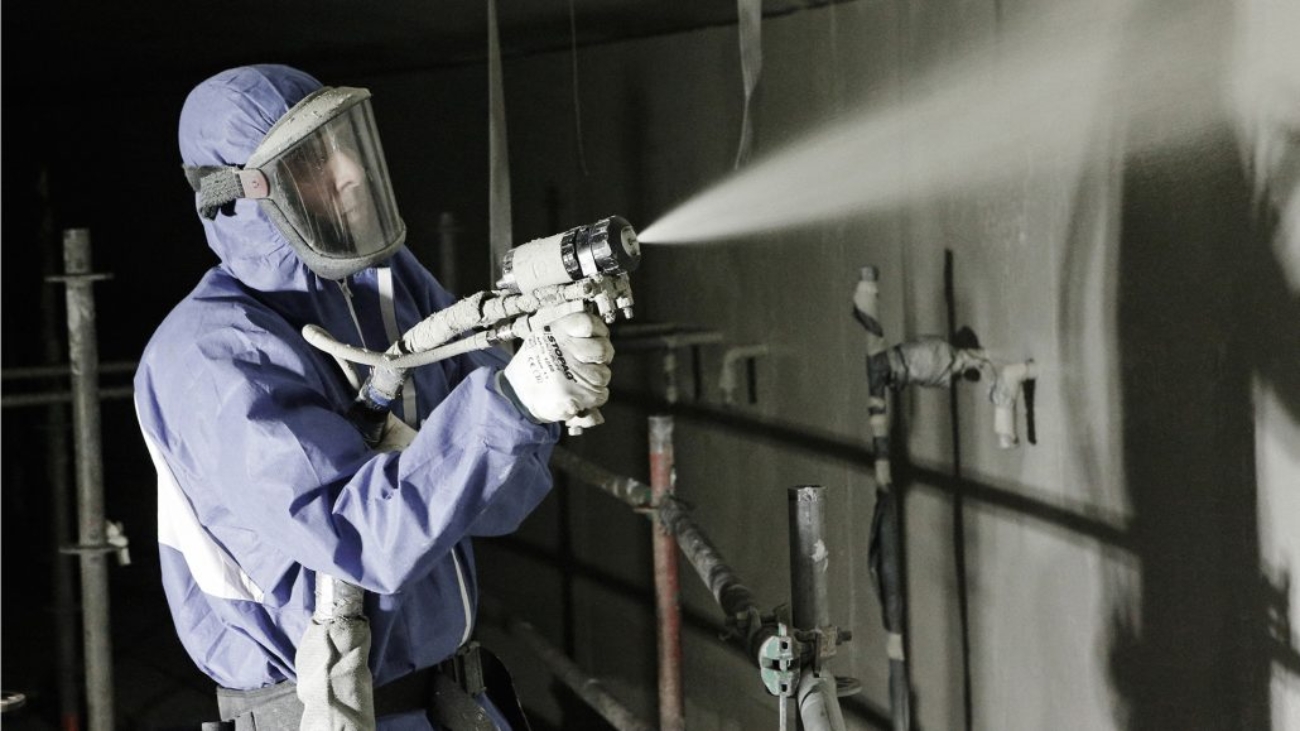
Polyurea is a two-component spray-applied coating. An isocyanate component and a resin blend react on contact, curing in seconds to minutes rather than the hours typical of many conventional coatings. That reaction speed is what makes polyurea useful in Canada specifically: short weather windows, tight shutdown schedules, and remote sites where a crew cannot afford to wait around for a slow cure are common realities here in a way they are not in every market.

The finished coating is flexible rather than rigid, which matters when the substrate underneath is expanding and contracting through a Canadian winter and spring. It also tends to hold up well against abrasion, impact, and a wide range of chemical exposure, which is part of why it shows up so often in industrial and resource-sector settings rather than only decorative ones.

Cold-Climate Application

Cold weather changes how any spray-applied coating behaves, and polyurea is no exception. Reaction speed, viscosity, and adhesion can all shift as ambient and substrate temperatures drop. Reputable applicators account for this by preheating substrates, adjusting equipment temperature settings, and, where needed, using formulations suited to lower-temperature application rather than assuming a summer setup will perform the same way in a Prairie winter or a northern site.

Surface moisture is a related concern. A substrate that looks dry can still be too cold or too damp for a proper bond, particularly with frost or condensation. Moisture testing before application is standard practice on any serious Canadian job, not an optional extra.

Freeze-Thaw and Road Salt Exposure

Most of the country goes through repeated freeze-thaw cycling every winter, and in areas with road salt use, that cycling comes paired with chloride exposure that accelerates corrosion on unprotected steel and concrete. This combination is one of the more demanding tests a coating can face, since it is not a single harsh event but a repeated cycle of expansion, contraction, and chemical attack over years.

Polyurea’s flexibility helps it track substrate movement through freeze-thaw cycling without cracking the way a more rigid coating can. Its chemical resistance also helps on surfaces exposed to de-icing salt, whether that is a parking structure, a bridge component, or municipal infrastructure near a roadway. As climate events put growing pressure on Canadian infrastructure, this kind of resilience is becoming less of a bonus feature and more of a baseline expectation.

Oil Sands and Mining Applications

Alberta’s oil sands operations and mining sites across the country represent one of the largest industrial uses of polyurea coatings in Canada. Secondary containment structures, tank exteriors, equipment linings, and structural steel all face a combination of abrasion, chemical exposure, and extreme temperature swings that make a flexible, fast-curing coating attractive.

Remote site logistics also play a role here. A coating that cures quickly and tolerates a wider application window reduces the number of site visits and the total time equipment or infrastructure is out of service, which matters more when the nearest supply depot is hours away.

Municipal and Water Infrastructure

Water and wastewater infrastructure across Canadian municipalities, including treatment tanks, lift stations, and pipe linings, is another common application. This extends to smaller-scale storage as well, including cistern lining projects, where the same flexibility and chemical resistance that suits large municipal tanks also applies at a residential or agricultural scale. Any coating being considered for contact with potable water needs a verified certification for that specific use under the exact product name in question. That verification should come from the coating manufacturer or applicator directly, not be assumed from general industry reputation.

Canadian Standards and Regulatory Framework

Coatings work in Canada does not fall under one single federal law the way some people expect. Instead, several layers apply depending on the project:

  • CSA Group standards cover a range of relevant material and application specifications used across Canadian industry.
  • Provincial environmental regulators, such as Alberta’s environmental protection framework or Ontario’s Ministry of the Environment, Conservation and Parks, govern spill prevention, containment, and related environmental requirements, and these rules vary by province.
  • The National Building Code of Canada, adopted with amendments by each province and territory, applies to structural and building-related coating work.
  • WHMIS (Workplace Hazardous Materials Information System) governs how coating chemicals are labelled, handled, and communicated to workers on site.

Because requirements vary by province and by application, checking the current regulatory framework for the specific job location is worth doing before work begins rather than assuming national uniformity.

Supply and Sourcing in Canada

Polyurea materials for the Canadian market are typically sourced either from Canadian-based suppliers and applicators or imported from manufacturers in the United States, with logistics and lead time varying accordingly. For projects in remote or northern locations, confirming supply chain reliability, including how weather and road conditions affect delivery timelines, is a practical planning step that is easy to overlook until it causes a delay.

Polyurea vs. Conventional Coatings for Canadian Conditions

FeaturePolyureaConventional Coatings (e.g. epoxy, paint)
Cure timeMinutes to about an hour, even in cooler weather with the right setupHours to a full day, longer in cold conditions
FlexibilityHigh, tracks substrate movement through freeze-thawLower, more prone to cracking with repeated cycling
Cold-weather applicationPossible with adjusted equipment and formulationOften limited by a narrower temperature window
Road salt and chemical resistanceStrong across a wide rangeGood for milder exposure, weaker under heavy chloride or chemical load
Typical Canadian useOil sands, mining, municipal infrastructure, exterior structuresInterior, lighter-duty, or budget-constrained applications

Best Use Cases by Sector

Resource and industrial sector

  • Oil sands secondary containment and equipment linings
  • Mining infrastructure exposed to abrasion and impact
  • Structural steel exposed to chemical or weather extremes

Municipal and infrastructure

  • Water and wastewater tank linings (subject to certification for potable contact)
  • Bridge and parking structure components exposed to de-icing salt
  • Stormwater and containment structures

Lighter-duty and interior applications

  • Where budget or lower exposure severity favours a conventional coating instead

Things to Consider Before You Choose

  1. What is the realistic temperature range during the application window, not just the average seasonal temperature?
  2. Does the project involve potable water contact, and if so, is there a verified certification on file for the exact product?
  3. Which provincial regulations apply to this specific site and application?
  4. What is the substrate condition, and does it need moisture testing or surface preparation before coating?
  5. How does the applicator’s supply chain handle remote or seasonal logistics for this location?

Maintenance

Coated surfaces in Canadian conditions still need periodic inspection, particularly after a harsh winter or a season of heavy salt exposure. Look for early signs of edge lifting, abrasion wear at high-traffic points, or any area where the coating has been damaged by impact. Because polyurea is flexible and generally resists cracking, most maintenance is limited to spot repair rather than full recoating, but that depends heavily on the severity of exposure and the quality of the original application.

Frequently Asked Questions

Does polyurea work in extreme cold?

Application is possible in cold conditions with the right equipment, substrate preheating, and, in some cases, a cold-weather formulation. Extreme cold changes handling and cure behaviour, so it needs to be planned for rather than treated the same as a summer application.

Is polyurea suitable for oil sands and mining sites?

Yes. Its abrasion resistance, chemical resistance, and fast cure time make it a common choice for containment structures, equipment linings, and structural steel in these settings.

Can polyurea be used for drinking water tanks in Canada?

Only with a verified certification for potable water contact under the exact product name being used. This should be confirmed directly with the manufacturer or applicator before the product is specified for that purpose.

Does polyurea meet Canadian building code requirements?

Requirements depend on the specific application and the province, since the National Building Code of Canada is adopted with provincial amendments. Confirming code compliance for the specific project and jurisdiction is a necessary step before work begins.

How does polyurea handle road salt exposure?

It generally performs well against chloride exposure from de-icing salt, which is one of the more common reasons it is specified for parking structures, bridge components, and municipal infrastructure across Canada.

Conclusion

Polyurea has found a genuine fit across Canadian industry, not because of marketing but because the country’s climate and industrial mix, cold winters, freeze-thaw cycling, road salt, remote resource sites, reward a coating that cures fast, flexes with the substrate, and tolerates a wider range of application conditions than many conventional alternatives. Whether it is the right choice for a specific project still comes down to the substrate, the exposure, the applicable provincial regulations, and, where water contact is involved, the certification on file. Working through those specifics with a qualified applicator before specifying any product remains the most reliable way to get the right answer.

Gama-application

Polyurea vs. Cementitious Coatings: A Comparison of Strength and Versatility

In the realm of coatings, both polyurea and cementitious materials provide solutions, for shielding structures from physical harm. Each material possesses characteristics that render it appropriate for purposes. Having a grasp of the disparities between polyurea and cementitious coatings can assist professionals in selecting the option for their requirements. This piece delves into the strengths and attributes of each material offering insights into when to opt for polyurea versus when cementitious coatings might be more favorable.

Unraveling Polyurea

Polyurea is an elastomer formed through a chemical reaction between an isocyanate component and an amine resin. This reaction yields a polymer that solidifies rapidly creating a pliable coating. The quick curing process enables application making polyurea well suited for projects with time constraints. Once fully cured polyurea forms a watertight shield that shields surfaces from environmental pressures.

The flexibility of polyurea stands out as one of its attributes. Unlike coatings, polyurea can. Compress without fracturing making it appropriate for surfaces subject to movement or changes in size. This adaptability proves beneficial in settings to temperature fluctuations or mechanical strains, such as rooftops, bridges or industrial flooring.

Moreover aside from its flexibility polyurea boasts resistance, against water infiltration, chemicals and abrasive forces. These characteristics make it a popular option, for situations where the coating must endure conditions like in settings, wastewater treatment facilities or heavy duty industrial environments.

Understanding Cement Based Coatings


Cement based coatings are what their name indicates – coatings created from a blend of cement, water and different additives. They are applied as a slurry that solidifies into a lasting layer. For centuries cement based materials have been utilized to safeguard and reinforce structures and continue to be favored for uses today.

Cement based coatings are recognized for their durability and stiffness. Once they set they create a watertight layer that offers protection against physical impacts and environmental elements. This property makes them well suited for surfaces requiring resistance to wear and tear, such as walls, floors and foundations.

The inherent robustness of cement based coatings also grants them fire and heat resistance capabilities. This quality deems them suitable for situations where fire resilience’s crucially important – like in tunnels or industrial sites.

Comparison Between Polyurea and Cement Based Coatings
When deciding between polyurea and cement based coatings various factors need to be taken into account such, as flexibility curing time, environmental endurance and the specific conditions of the application site.
Polyurea is often preferred for projects that require curing and flexibility as it can adapt rapidly to conditions. Its ability to endure environments and resist chemicals and water makes it an excellent choice, for marine protective applications.

On the hand cementitious coatings are best suited for situations that demand hardness and lasting durability. Their slower curing process allows for application, which’s crucial for achieving a smooth and uniform coating. The strength of coatings lies in their capacity to create a resilient surface that can withstand physical impacts and environmental stressors making them ideal for safeguarding concrete structures, foundations and surfaces subject to heavy use or loads.

Although both materials offer protection, their distinct characteristics make them suitable for applications. Polyurea excels, in speed and flexibility ensuring reliability in demanding environments where the coating must endure levels of stress. Cementitious coatings stand out for their toughness and longevity delivering a finish that performs well in environments to wear and exposure.

Deciding on the Appropriate Coating

The choice of coating material depends on the requirements of each project.
If you need a coating that can quickly be applied and adapt to surface movement polyurea is your bet. This is especially important, in industries like construction or infrastructure where surfaces undergo changes and downtime should be minimized.

On the hand if you require a coating with a durable impermeable finish cementitious coatings might be more suitable. This is particularly crucial in settings where the coating needs to endure use, impacts or fire exposure such as floors or tunnels.

Polyurea and cementitious coatings protect various surfaces. By understanding their qualities, professionals can select the material for each job to ensure optimal performance under specific conditions.

In conclusion both polyurea and cementitious coatings are choices for coatings with their own strengths depending on the application. Polyureas quick curing time, flexibility and resilience in environments make it perfect, for marine uses.
The strength of coatings lies in their durability, hardness and ability to create a impermeable finish making them a reliable option, for concrete structures, foundations and surfaces that require lasting protection against physical wear and environmental elements.

Professionals can enhance their decision making by understanding the distinctions between these materials. This knowledge enables them to achieve outcomes and ensure safeguarding for the surfaces they protect. Whether prioritizing speed and adaptability with polyurea or prioritizing toughness and resilience with coatings choosing the appropriate coating guarantees project success by delivering the protection and performance, in challenging conditions.
canadian sprayer red background

Are There Any Regulations To Know About Before Starting A Polyurea Business In Canada?

For entrepreneurs considering starting a polyurea business in Canada, there are a few regulations to consider before starting. From obtaining permits and licenses to understanding health and safety standards, it’s important to do your research and ensure you are up-to-date with the latest rules and regulations that apply in your province or territory.

Getting Started: Starting A Polyurea Coatings Business

The first step in setting up a polyurea business is to secure the necessary permits and licenses to begin operations legally. Depending on where you plan on conducting business activities will determine what type of permits you require; some may include building permits for operating out of a storefront or workspace or even environmental permits if you plan on disposing of hazardous materials associated with the production process or any chemicals that could put human health at risk. Depending on the services provided and the products sold, you may also need insurance coverage for your business. Understanding local laws regarding taxation may also be important when establishing your business, so look into this beforehand.

Health & Safety Standards

In terms of health and safety standards related to polyurea production activities, the Canadian Centre for Occupational Health & Safety (CCOHS) provides information about recommended workplace safe practices when handling hazardous materials found in polyurea products such as isocyanates – which can cause skin irritation upon contact – silicone polymers – which can cause burns if not properly handled – and other chemicals present in various formulations used during manufacturing processes. The CCOHS also outlines additional protective measures such as wearing personal protective equipment (PPE) like gloves and goggles while working with these chemicals, ensuring adequate ventilation systems are installed in workspaces where needed, and properly storing all hazardous materials away from areas frequently accessed by workers or consumers.

Local Regulations

It’s also essential for those looking to start a polyurea business in Canada to familiarize themselves with local regulations regarding environmental protection measures related to hazardous waste disposal and the usage of volatile organic compounds (VOCs). Depending on the specific product being used and where it is being applied, special handling protocols may need to be followed when disposing of any residues or byproducts generated during the application process. Furthermore, some provincial and territorial governments have imposed restrictions on VOC levels associated with certain products used for spray-on applications like polyurea coatings due to their potential impacts on air quality. Businesses operating within these jurisdictions must ensure they comply with all relevant legislation pertaining to emissions from these activities before starting operations.

Marketing Requirements

For those who wish to market their services related to polyurea products in Canada, there may also be several marketing requirements that need to be taken into consideration depending on which provinces/territories you plan on targeting your services. For instance, Quebec has very strict advertising laws which require businesses targeting consumers within its borders must abide by provincial language restrictions when designing any promotional materials used for communication purposes (e.g., website content etc.). Failure to do so can lead hefty fines if found guilty of breaking any rules set out by this province’s language laws governing advertising efforts made by companies operating within its jurisdiction(s).

Business Insurance

Finally, entrepreneurs should not forget about obtaining insurance coverage for their new venture prior to commencing operations; this will help protect them financially should anything unexpected happen during the course of running their business (e.g.; accidents/injuries sustained by workers or damage resulting from unforeseen events etc.). In addition, depending upon the particular services offered by one’s establishment an additional liability policy might also come into play given certain types of polyurea work can prove quite risky under certain circumstances; having such coverage could prove invaluable should something go wrong the line either within one’s own company or another party directly involved in one’s operations – even if indirectly!

Purchasing Polyurea Products

When it comes to purchasing supplies for your polyurea business, one company leads the pack and has been the go-to distributor for over 30 years. ArmorThane has revolutionized the polyurea industry the way Tesla revolutionized the car industry.

ArmorThane’s wide selection of high-quality polyurea products makes it an ideal choice for anyone living in Canada looking for top-notch protection against environmental factors without sacrificing performance capabilities or flexibility needed in certain projects such as marine vehicles or specialized machinery components production lines where regular maintenance is necessary. Still, downtime must be kept at minimum levels–all at competitive prices that won’t put too much pressure on budgets either!

All things considered, starting a polyurea business in Canada can certainly prove lucrative; however, it is important prospective entrepreneurs take into account all applicable regulations before embarking on this venture so as not only to remain compliant but also reduce any potential risks associated with offering such services/manufacturing goods within our great nation!

1e-foto3-1030x579

5 Reasons Why Armorthane is the Best Canadian Polyurea Manufacturer

In this blog post, we’ll discuss why ArmorThane is the best Canadian polyurea manufacturer and what makes them stand out in terms of quality, innovation, and customer service. First, let’s cover what Polyurea is and why you should join this revolutionary new industry.

What Is Polyurea?

Polyurea is a type of sprayable coating that is rapidly gaining popularity in the world of industrial and commercial applications. This cutting-edge technology offers a range of benefits, including exceptional durability, chemical resistance, and faster curing times than traditional coatings like epoxy and urethane. Polyurea coatings can be used for various applications, from waterproofing to protective coatings for metals, concrete, and other surfaces.

What Are The Key Characteristics Of Polyurea?

One of the unique properties of polyurea is its flexibility. It can expand and contract with changes in temperature and humidity without cracking or peeling. Plus, polyurea coatings have excellent resistance to chemicals and abrasions, making them ideal for industrial facilities where harsh chemicals or heavy machinery can cause wear and tear on flooring and other surfaces.

Polyurea coatings also offer excellent adhesion, which allows the coating to remain attached to the substrate without delamination or chipping.

Polyurea vs. Epoxy and Urethane

Polyurea coatings share some similarities with epoxy and urethane coatings, but they also have several key differences. Polyurea coatings cure much faster than epoxy and urethane coatings, which require a longer wait time before returning to service. Also, epoxy coatings tend to be more brittle and are prone to cracking. Urethane coatings are more flexible than epoxy coatings, but they have less chemical and abrasion resistance than polyurea.

Why You Should Join The Polyurea Industry

Starting a polyurea coating business is a lucrative venture. The growing demand for this versatile coating material in various industries presents enormous opportunities for entrepreneurs. Polyurea coatings have high-profit margins, a wide range of applications, low overhead costs, and are eco-friendly, making them an excellent choice for anyone looking to break into the coatings industry. If you are considering starting a coatings business, take a closer look at polyurea coatings. It may be the best investment you ever make.

Ok now that you have that information, let’s talk about who ArmorThane is and why they are the top polyurea manufacturer in Canada.

Who Is ArmorThane?

If you are looking for a durable and versatile spray-on coating for your commercial or industrial needs, you might have come across the name ‘Armorthane’. Armorthane is a specialized line of polyurea coating systems that has established its reputation as a leading solution in various industries, including automotive, marine, construction, and manufacturing. But what exactly is Armorthane and how does it differ from other spray-on coatings? In this article, we will take a comprehensive look at Armorthane and its features that make it a popular choice for Canadian contractors.

  1. Quality standards
    ArmorThane prides itself on producing the highest quality polyurea coatings in Canada. They use only the best raw materials to ensure their products meet strict quality standards. Their state-of-the-art manufacturing facilities adhere to ISO 9001:2015 certification and follow rigorous testing and inspection protocols. ArmorThane’s polyurea coatings undergo extensive testing for adhesion, abrasion resistance, impact resistance, weathering, and chemical resistance. This ensures that their coatings can withstand extreme environments and provide long-term protection and durability for various substrates.
  2. Innovation and customization
    ArmorThane is a company that constantly strives to innovate and improve its products. They have a dedicated research and development team that’s continuously looking for ways to enhance their polyurea coatings’ performance, versatility, and sustainability. They also offer custom formulations to meet specific customer needs and requirements. This means that they can create polyurea coatings that are tailored to a particular substrate, application, color, texture, or thickness. ArmorThane’s customization capabilities allow them to provide more options and solutions for their clients, making them a preferred Canadian polyurea manufacturer.
  3. Expertise and support
    ArmorThane has a team of highly trained and experienced professionals who support their customers throughout the purchase and application process. They provide technical guidance, training, and troubleshooting assistance to ensure that their polyurea coatings are properly applied and meet the desired results. They also offer project consulting services to help customers select the right coatings for their specific applications and budgets. ArmorThane’s focus on customer support and satisfaction sets them apart from other polyurea manufacturers in Canada.
  4. Sustainability and eco-friendliness
    ArmorThane is committed to sustainable manufacturing practices and eco-friendliness. They use environmentally friendly raw materials and production processes that minimize waste, emissions, and energy consumption. Their polyurea coatings are VOC-free, non-toxic, and odorless, making them safe for people and the environment. ArmorThane also supports green initiatives and promotes recycling and waste reduction in their operations. Their sustainability efforts demonstrate their dedication to social responsibility and environmental stewardship.
  5. Customer testimonials and success stories
    Finally, one of the best ways to gauge a manufacturer’s reputation and quality is to look at their customer testimonials and success stories. ArmorThane has a long list of satisfied clients from various industries who have used their polyurea coatings for a wide range of applications, from truck bed liners and industrial flooring to water park attractions and military vehicles. These testimonials and success stories attest to the quality, durability, and versatility of ArmorThane’s polyurea coatings and their ability to meet and exceed customer expectations.

In conclusion, ArmorThane is the best Canadian polyurea manufacturer due to its commitment to quality, innovation, customer support, sustainability, and proven track record. Whether you’re a contractor, a business owner, or an individual seeking reliable and efficient protective coatings for your projects, ArmorThane is the ideal choice. Contact them today to learn more about their products and services and how they can help you achieve your goals.


931_main

A Look At The Everchanging Industrial Protective Coating Market

Amine-cured epoxy is one of the most successful chemically resistant coatings on the market. They tend to come as epoxy with filler and other additives on the A-side and amine curative on the B side. When mixed, they give a sprayable coating with a very workable pot life and good adhesion to a wide variety of substrates. The cured epoxy coating’s ultimate chemical resistance will depend on several key factors, including the chemical composition of both the epoxy and the amine curative, the types of fillers and additives used, and the cure temperature and time. 

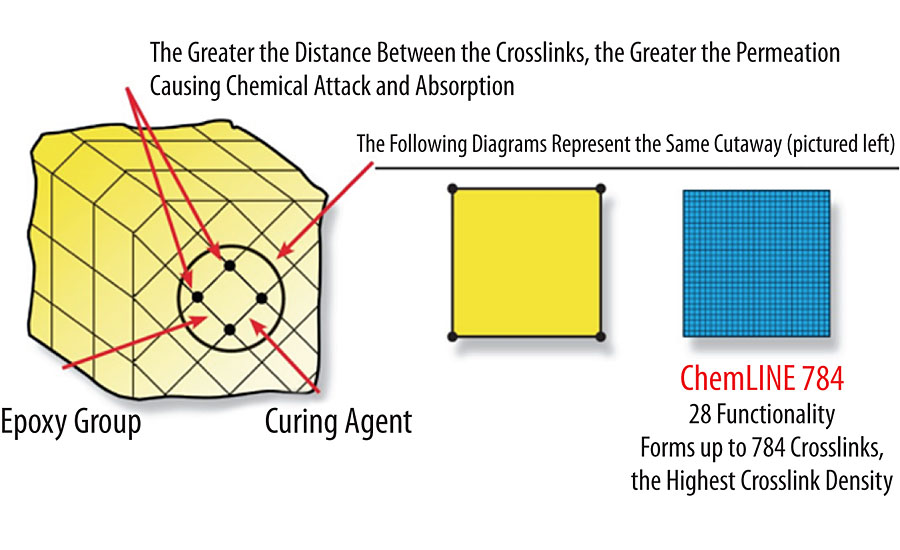
Crosslink density of traditional epoxy coating compared to polymer-modified epoxy coating.

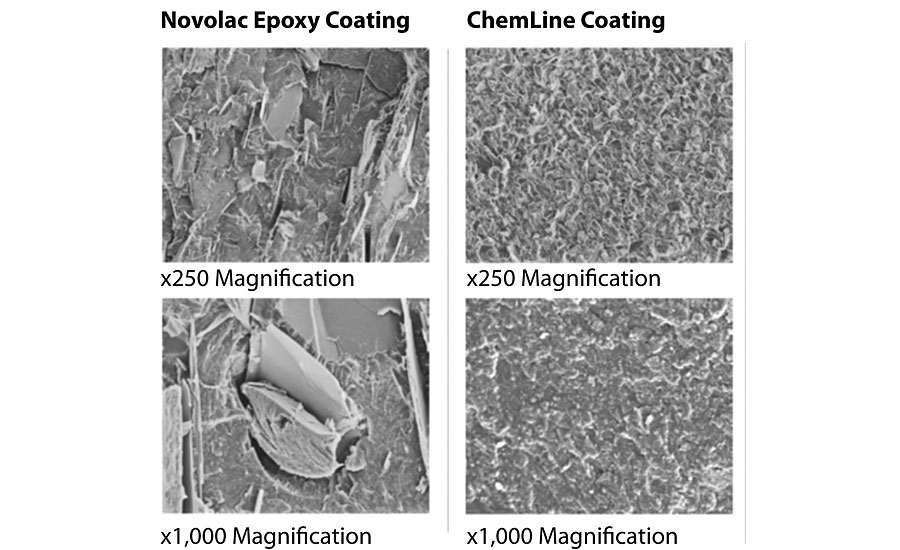
With a low crosslink density, a polyurea coating is susceptible to penetration from corrosive chemicals, which can eventually reach the substrate, creating corrosion and leading to its ultimate failure. However, with a very high crosslink density, the product provides a virtually impenetrable barrier between the chemical and the substrate. Also, chemicals do not penetrate the coating, which can occur in common epoxies, leading to blistering, splitting, and coating degradation. 

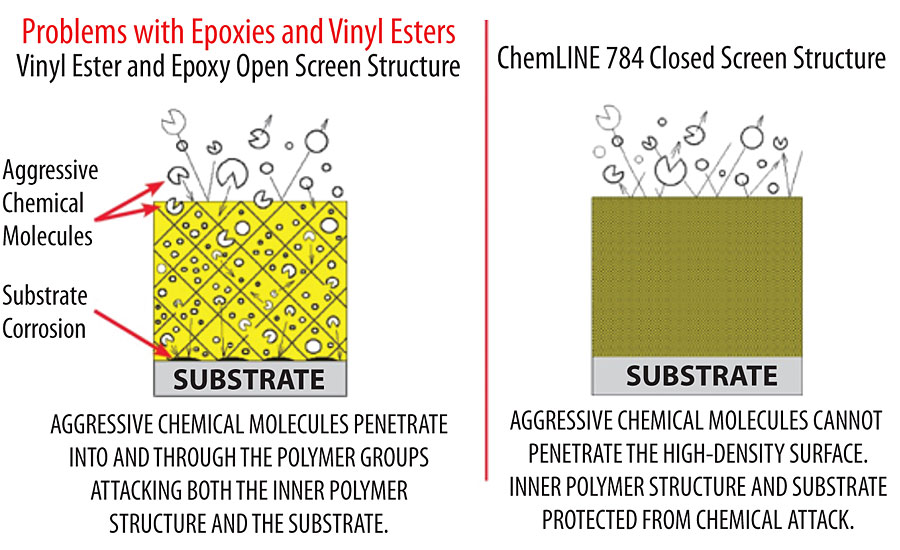
Chemical penetration of coatings with different crosslink densities.

In a low-crosslink-density coating, the chemicals will penetrate through the coating to the substrate, causing substrate corrosion. Because the solvent has penetrated the coating, both the epoxy and amine curing agent bonds will be broken by chemical attack. As for the coating with high crosslink density, the chemicals will be unable to penetrate the coating. This will not only protect the substrate from corrosion but also protect the coating itself from any damage.

With the emerging needs for both industrial and marine applications, coatings have a wide range of technical requirements in addition to chemical resistance. We will cover the technical and market needs for each of these requirements along with recent developments to meet these demands.

SEM of coatings with different crosslink densities.

Coatings for Sulfuric Acid

Sulfuric acid is a very important industrial chemical used for such things as the manufacturing of phosphate fertilizers, purification of petroleum, acids, along with being used as a pickling medium for metals, and in storage batteries. 

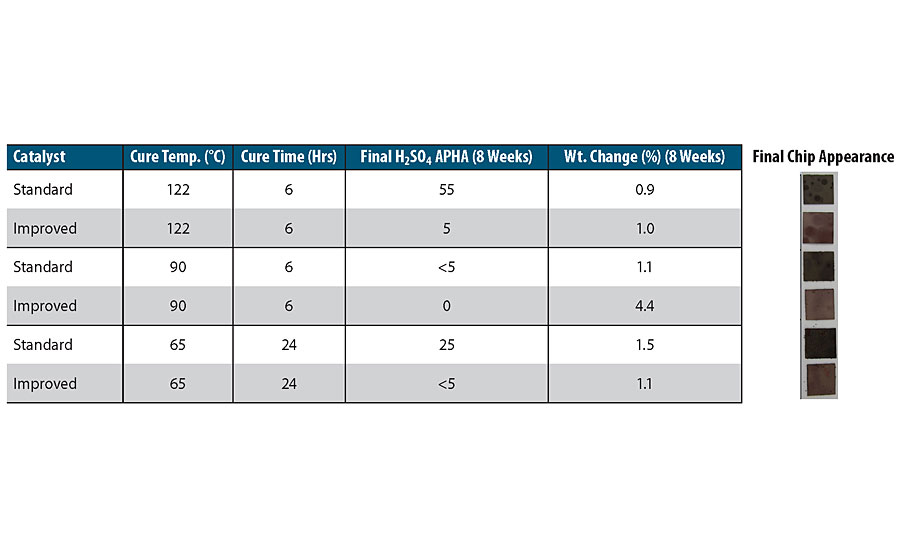
Two-component epoxy coatings show excellent resistance to sulfuric acid of most concentrations and transportation and storage temperatures. They have been used successfully for years, but unfortunately can darken upon exposure to sulfuric acid.

Sulfuric acid immersion testing of improved catalyst for 2K epoxy coating.

Coating Inspection Facilitation

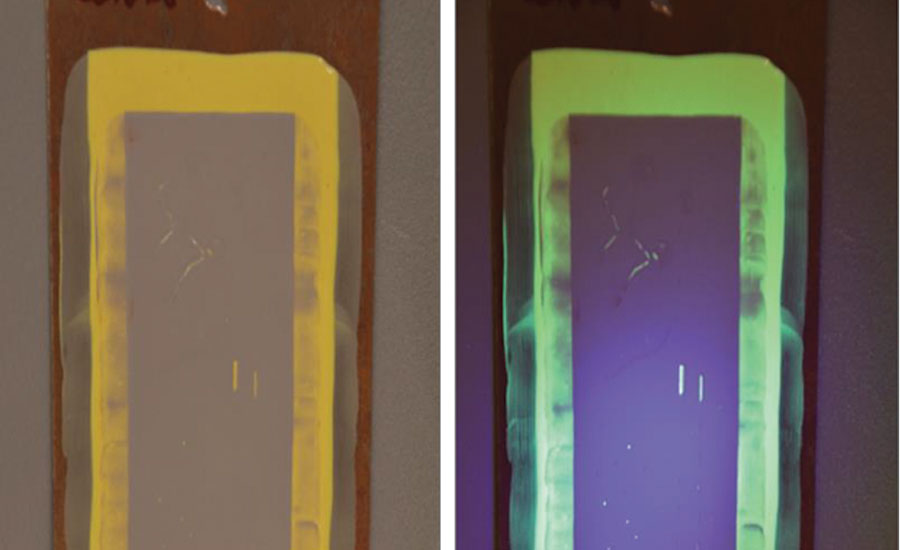
Ensuring the integrity of the coating is critical for the protection of the substrate. Failure of the coating cannot only cause destruction to the vessel, costing the owner both time and money, but it can also pose a danger to workers and the surrounding environment. Proper inspection of the coating itself can be time-consuming and expensive, and based on the vessel’s geometry being examined, some areas can be very hard to probe. Coatings must regularly be examined for damage to make sure that there are no cracks, holes, or chips. The entire vessel must be examined after draining and cleaning, which can be difficult again because of the complex geometries along with the hazards associated with sending workers into the vessels for review.

Fluorescent basecoat and standard gray topcoat with defects purposely introduced.

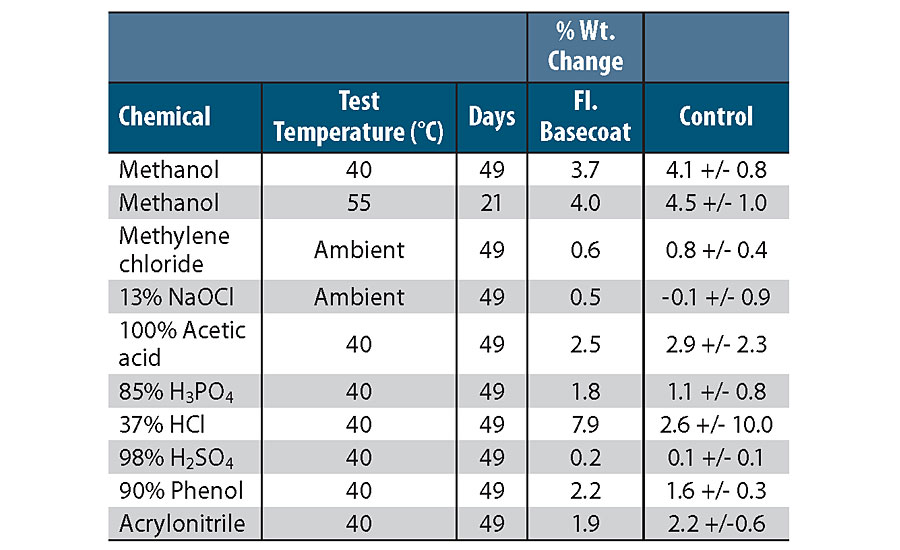
Coatings should expedite the inspection process, reducing chances of coating failure and overall simplifying the inspection process. 

Immersion testing of chemically resistant 2K epoxy fluorescent basecoat/standard topcoat.

Antistatic Coatings

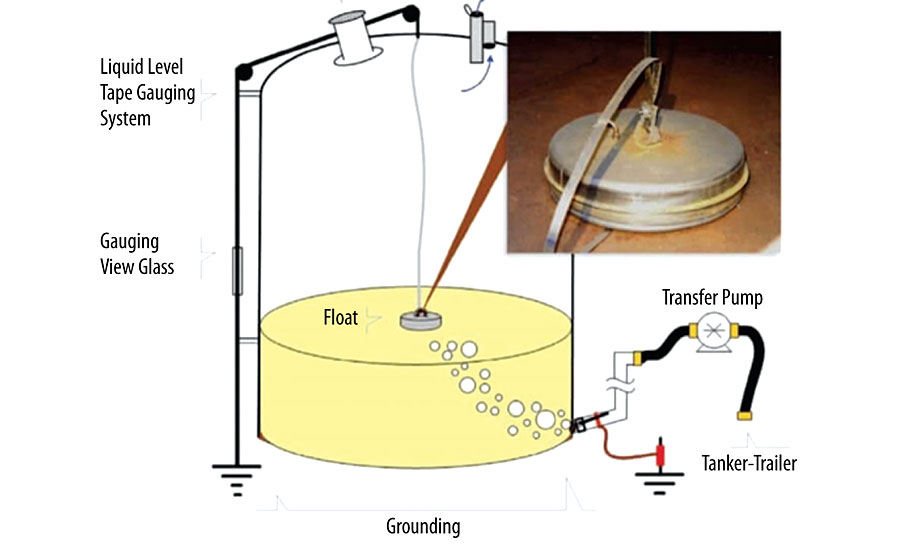
Static electricity presents a very significant risk for not only the safety of people and property but also of products that are susceptible to static electricity, such as electronics components. 

Barton solvents naphtha storage tank.
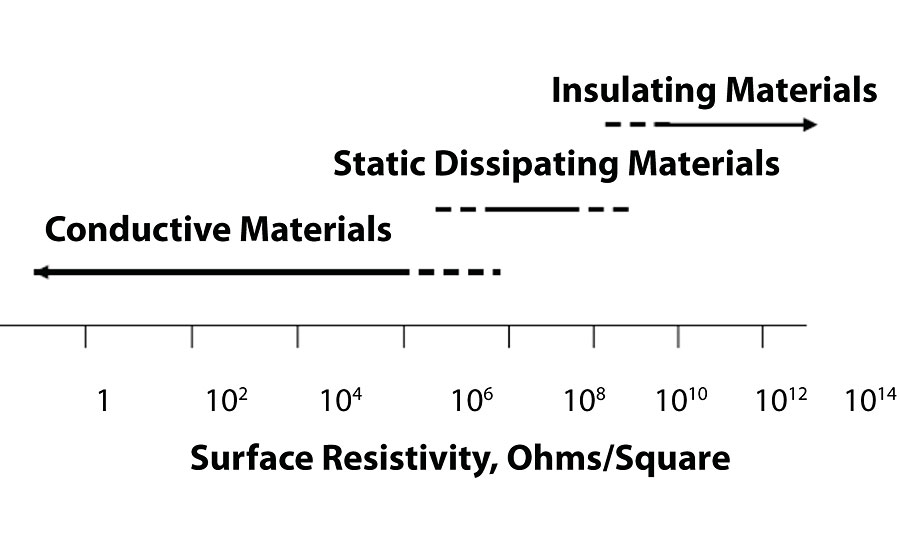
Surface and volume resistivity ranges.

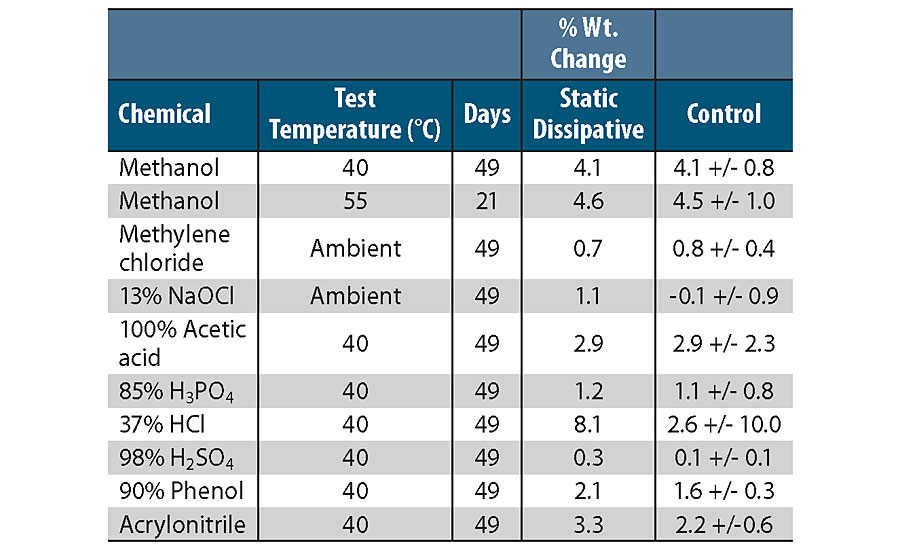
Chemical resistance of static dissipate 2K polymer-modified epoxy coating.

Improved Abrasion Resistance

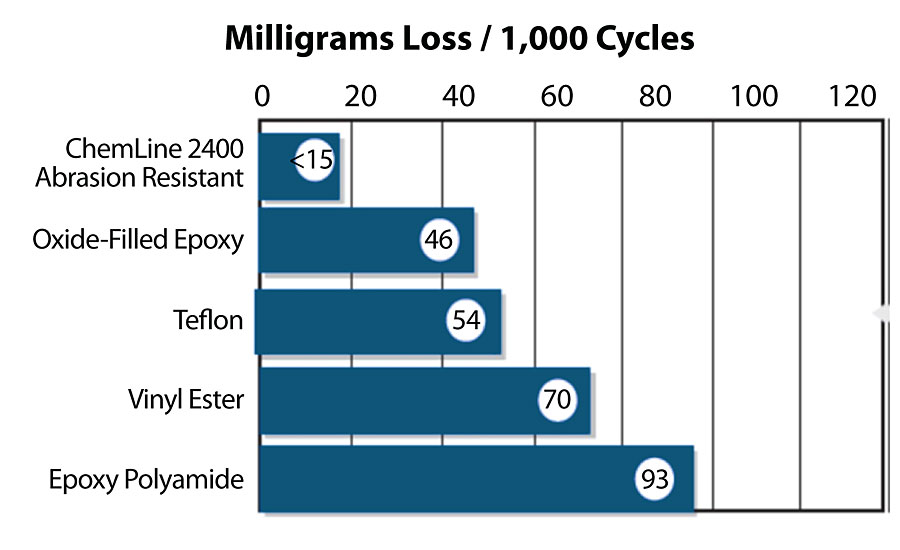
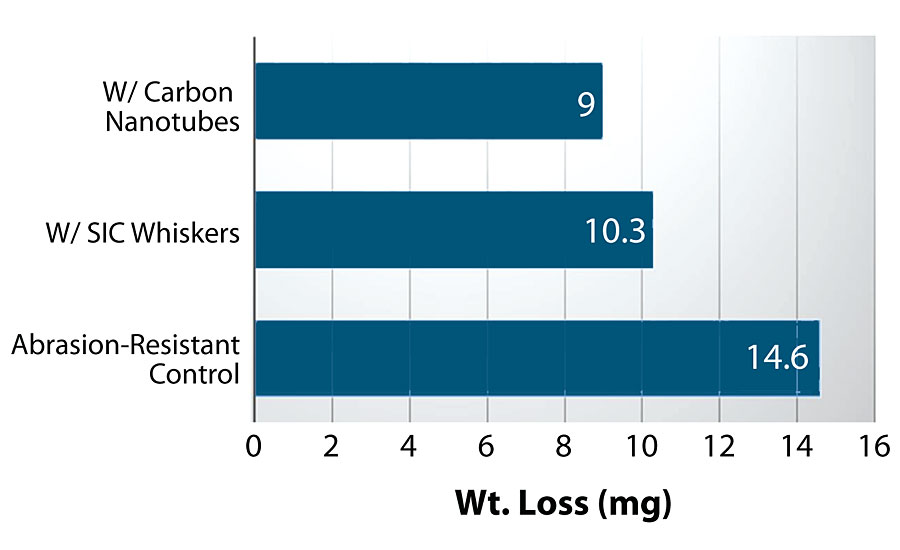
Coatings used to stock chemicals and other substances can sustain damage from abrasion, such as the loading and unloading of supplies in the form of slurries or from cleaning procedures. Applications that could benefit from an improvement in abrasion resistance could include hopper cars, slurry pipes, legs of oil platforms, pumps, coal chutes, baghouses, and ion exchange vessels. Epoxy coatings can provide great chemical resistance through a high degree of crosslinking and the correct chemical structure, however this can lead to a coating that can be brittle and subject to damage from abrasion. 

Abrasion resistance of chemical-resistant coatings.

Field-Repairable Coatings

Recent changes to regulations from the American Association of Railroads (AAR) require that for a tank car facility to be certified, it must be able to demonstrate the procedure to repair coatings on a periodic basis. 9 High-bake phenolic coatings are widely used in the rail industry due to their excellent chemical resistance to a wide variety of products. Repair of high-bake phenolic coatings requires that the tank car first be returned to the facility, where the coating repair would then be demonstrated. The coating repair of high-bake phenolics requires that the entire tank car be taken up to high temperatures (350 °F to 400 °F), which can damage the exterior paint and stencils. This adds an extreme amount of cost for the tank car facility, along with a great deal of time for the tank cars to be out of service. Having a coating that can have its repair demonstrated in the field is therefore very important to tank car facilities. Two-part epoxy coatings can meet these needs. 

Abrasion resistance of coatings containing SiC whiskers or carbon nanotubes (mg/1,000 cycles).

Future Industry Needs

Vessel owners continue to look for ways to reduce operating expenses, and therefore chemical-resistant coatings must deliver opportunities to achieve these goals. One such opportunity is for coatings that release cargo from the walls faster than current technologies. This would allow for quicker unloading of vessels, along with easier cleaning, allowing for less time between unloading and loading. Ability to carry different chemicals would also save vessel owners time and money. The same asset could be used to transport or store a wide variety of chemicals, eliminating the need to either re-coat current vessels or to possess different storage options for each chemical. The coating should therefore be resistant to the widest variety of chemicals possible and should not absorb chemicals that can later be released and contaminate the next chemical loaded into the vessel. 

Conclusion

Developments in chemically resistant, 2K polymer-modified epoxy coatings have met several market needs, including carry of sulfuric acid, coating inspection facilitation, improved abrasion resistance, anti-static coatings, and field-repairable coatings. These coating systems continue to be rulers in chemical-resistant applications in both marine and industrial applications, and will meet anticipated market needs through continued innovation.

Sources: polyureamagazine.com, polyureanation.com, americanpolyurea.org, polyureareviews.com, armorthane.com