
Water doesn’t knock before it enters your home — it seeps, creeps, and finds every crack your foundation has to offer. If you’ve ever walked into a basement and caught that unmistakable smell of dampness, or worse, found puddles forming along your walls after a heavy rain, you already know that foundation water problems aren’t just an inconvenience. They’re a ticking clock. Left unaddressed, moisture intrusion can compromise the structural integrity of your entire home, encourage toxic mold growth, and wipe out tens of thousands of dollars in property value.
Foundation waterproofing is the process of sealing, coating, draining, and protecting your home’s foundation from groundwater, surface runoff, and soil moisture. It’s one of the most important investments a homeowner can make — not because something is necessarily wrong today, but because prevention is exponentially cheaper than repair. This guide breaks down everything you need to know: the science behind water intrusion, the most effective waterproofing methods, what to expect from a professional installation, and how to choose the right solution for your specific situation.
Why Foundation Waterproofing Matters More Than You Think
Most people don’t think about their foundation until something goes wrong. That’s understandable — foundations are largely invisible, buried underground and covered in drywall and flooring. But beneath every home, the foundation is constantly interacting with the surrounding soil, and that soil is almost always wet to some degree. Clay-heavy soils expand when saturated and push against your foundation walls. Sandy soils drain fast but offer little support. In either case, hydrostatic pressure — the force exerted by water-saturated ground against your foundation — is a persistent and powerful force.
When that pressure finds a way through, even microscopic cracks in poured concrete or mortar joints in block foundations become entry points. What starts as a hairline crack can widen with each freeze-thaw cycle. What starts as minor seepage can become a flooded basement after a single heavy storm. The financial stakes are significant: homes with unresolved water damage can lose 10–25% of their market value, and remediation after major water damage routinely costs $20,000 to $100,000 or more.
Beyond the dollars, there’s the health dimension. Mold thrives in moisture-rich environments, and many hazardous mold species grow readily on damp concrete, wood framing, and drywall. Prolonged mold exposure has been linked to respiratory issues, chronic fatigue, neurological symptoms, and immune system complications. Waterproofing your foundation isn’t just about protecting your home — it’s about protecting the people living inside it.
Understanding the Sources of Foundation Water Infiltration
Before selecting a waterproofing approach, it helps to understand exactly where water is coming from and how it behaves. Not all water intrusion looks the same, and different sources call for different solutions.
Surface Water and Poor Drainage Grading
One of the most common culprits is surface water that pools near the foundation due to improper grading. The ground around your home should slope away at a minimum rate of 6 inches over the first 10 feet from the foundation. When it doesn’t — whether because of settling, landscaping decisions, or poor original construction — rainwater collects directly against your basement walls. Even a modest rainfall can deposit hundreds of gallons of water at your foundation’s doorstep. Correcting the grade is often the first and most cost-effective step in any waterproofing strategy.
Hydrostatic Pressure From Groundwater
In areas with high water tables or clay-dense soils, hydrostatic pressure can be severe and relentless. The water in saturated soil pushes against your foundation from all sides, finding any path of least resistance. This type of intrusion often appears as sweating walls, efflorescence (the white mineral deposits left behind as water evaporates through concrete), or cracks that seem to weep moisture rather than leak outright. Hydrostatic pressure-related intrusion typically requires more aggressive solutions like exterior waterproofing membranes, drainage boards, or interior drain tile systems.
Gutters, Downspouts, and Window Wells
Poor gutter maintenance and improper downspout placement are responsible for more foundation damage than many homeowners realize. Gutters that overflow dump large volumes of water directly against the foundation. Downspouts that discharge within a few feet of the home concentrate runoff at the most vulnerable point. Similarly, basement window wells that lack proper drainage become collection basins that press water into window frames and wall penetrations. These are mechanical fixes that should be addressed alongside any waterproofing work.
Cracks in the Foundation Itself
Concrete is not impermeable by nature. It cures over years, shifts with soil movement, and expands and contracts with temperature changes. Hairline cracks are common and don’t always indicate structural failure, but they do create pathways for water. Horizontal cracks are more serious — they often indicate lateral soil pressure and may signal structural compromise. Stair-step cracks in block foundations usually indicate differential settling. Each crack type tells a story about what’s happening underground, and treating them appropriately is central to effective waterproofing.
The Main Foundation Waterproofing Methods Explained
There is no single solution that works for every foundation or every water problem. Professional waterproofing contractors assess the specific nature of intrusion, the foundation type, the soil conditions, and the local climate before recommending an approach. That said, the most commonly used methods fall into a few broad categories.
Exterior Waterproofing
Exterior waterproofing is widely regarded as the most comprehensive and long-lasting solution because it addresses water at the source — before it ever contacts your foundation wall. The process involves excavating around the perimeter of the foundation down to the footing, cleaning the wall surface, and applying a waterproof coating or membrane to the exterior face. A drainage board is then installed over the membrane to direct water downward, where it enters a perforated drain pipe running along the footing. This pipe carries water to a sump pit or daylight outlet well away from the home.
The excavation required makes exterior waterproofing the most disruptive and expensive approach — typically ranging from $8,000 to $15,000 or more for an average home. However, it’s the only method that truly prevents water from ever reaching the foundation wall, making it the gold standard for severe hydrostatic pressure or active structural cracking. For new construction, exterior waterproofing membranes applied before backfilling are considered best practice and are often code-required.
Interior Waterproofing and Drainage Systems
Interior waterproofing doesn’t stop water from entering the foundation — instead, it manages and redirects water that does get in. The most common system involves installing a drainage channel along the interior perimeter of the basement floor. The concrete floor is broken up along the edges, a perforated pipe is laid in gravel, and the floor is re-poured over it. Water that seeps through the walls or up through the floor is captured by this channel and directed to a sump pump, which ejects it away from the home.
Interior systems are typically less expensive than exterior excavation — costs generally range from $3,000 to $8,000 depending on basement size and complexity — and they’re less disruptive to landscaping. The trade-off is that water is still contacting the foundation wall, which means long-term concrete deterioration continues. For many homeowners, however, an interior system paired with a quality sump pump and a battery backup is a practical and effective long-term solution.
Polyurea and Polyurethane Coatings
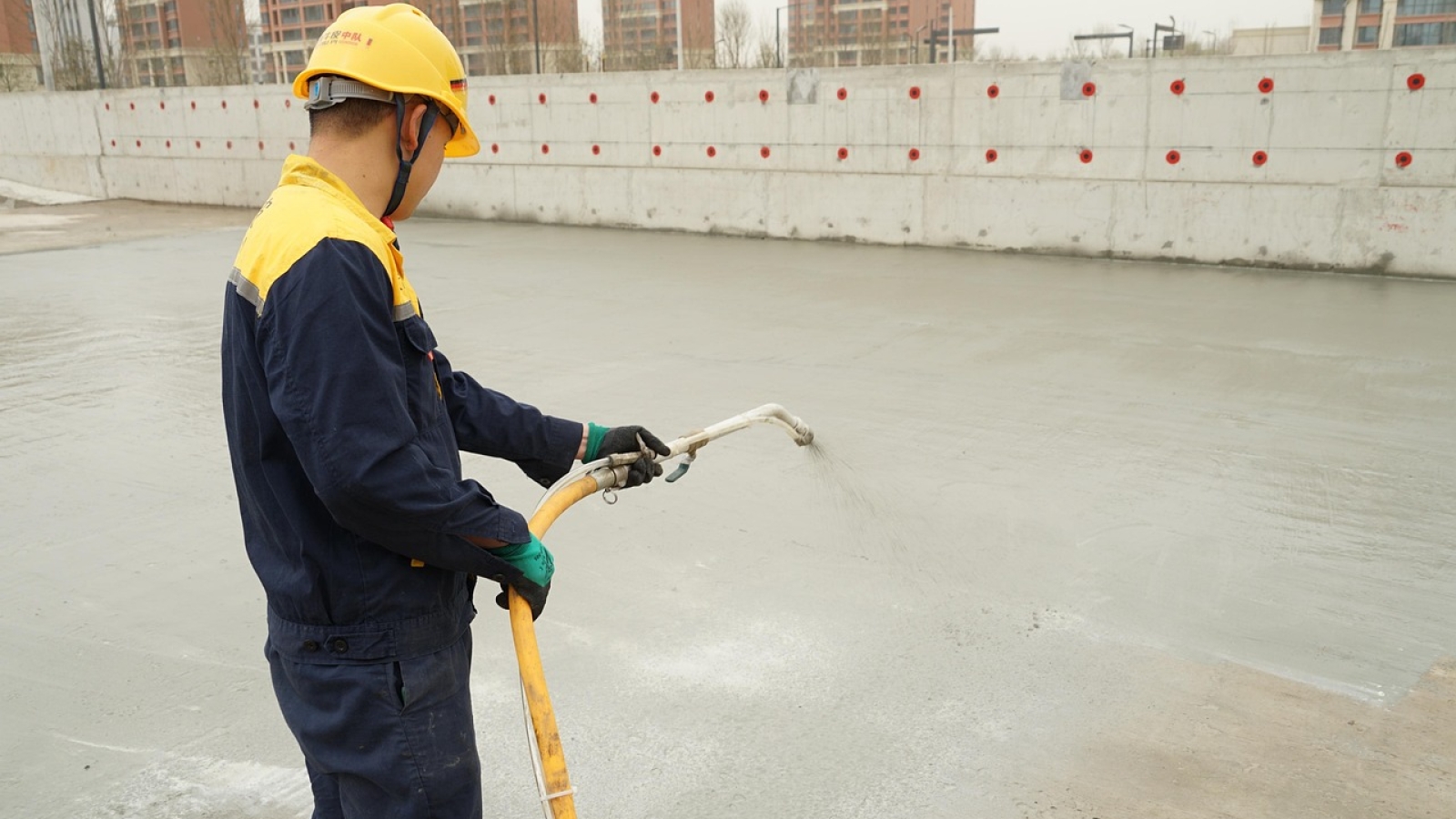
One of the most significant developments in foundation waterproofing over recent decades has been the rise of spray-applied polyurea coatings. Polyurea is a two-component elastomeric compound that cures within seconds of application, forming a seamless, flexible, waterproof membrane that bonds tightly to concrete, masonry, and other substrates. Unlike traditional waterproofing paints or brush-applied coatings, polyurea doesn’t just sit on the surface — it penetrates and bonds at a molecular level, creating a barrier that flexes with the foundation rather than cracking away from it.
Polyurea coatings are highly resistant to UV exposure, temperature extremes, and chemical attack, making them suitable for both interior and exterior applications. They can be applied to new or existing foundations, tank linings, crawl spaces, and mechanical rooms. The application process is fast — an experienced crew can coat an entire foundation in a day — and the resulting membrane is typically 60–100 mils thick, compared to 10–20 mils for most brush-applied products. For projects where durability, speed, and long-term performance are the priority, polyurea represents a genuine advancement in waterproofing technology.
Crystalline Waterproofing
Crystalline waterproofing takes a fundamentally different approach. Rather than coating the surface of the concrete, crystalline products use a chemical reaction with cement and water to grow microscopic crystals within the concrete matrix itself. These crystals fill pores and microcracks from within, making the concrete denser and less permeable over time.
The remarkable property of crystalline waterproofing is that it’s self-healing — if a new crack forms and water enters, the crystalline reaction reactivates and fills the new pathway. Products in this category have been used extensively in tunnels, water treatment facilities, and underground parking structures. For residential applications, crystalline coatings offer a clean, paintable alternative to heavy elastomeric systems, though they are most effective when water pressure isn’t extreme.
Injection Methods for Crack Repair
When a specific crack is the source of water infiltration, injection repair is often the most targeted and cost-effective solution. Two primary materials are used: epoxy and polyurethane foam. Epoxy injections bond the two sides of a crack back together with structural adhesive, restoring the tensile strength of the concrete — ideal for non-moving structural cracks. Polyurethane foam injections expand aggressively upon contact with water, physically plugging the pathway even in actively leaking conditions. Foam injections are typically used for moving or active leaks where rigid bonding isn’t the primary concern.
Crawl Space Waterproofing: The Often-Overlooked Problem
Many homes have crawl spaces rather than full basements, and these shallow unfinished spaces are notorious moisture traps. Exposed earth floors release moisture continuously through evaporation, and the humid air migrates upward into the living space above, causing floor systems to rot, insulation to fail, and air quality to deteriorate throughout the home. Research from building science experts suggests that a significant percentage of a home’s first-floor air comes directly from the crawl space — meaning whatever’s growing down there is being breathed upstairs.
Effective crawl space waterproofing typically involves encapsulation: covering the ground floor and walls with a heavy-duty vapor barrier, sealing vents, and installing a dehumidifier or integrated drainage system. When done correctly, crawl space encapsulation transforms a damp, problematic area into a clean, dry space that contributes positively to home performance. Energy savings, improved HVAC efficiency, and dramatically better indoor air quality are commonly reported benefits.
Warning Signs Your Foundation Needs Waterproofing Now
Some foundation water problems announce themselves loudly — standing water after rain, visible mold colonies, rusted steel components. Others are far more subtle, and homeowners often dismiss early warning signs until the damage becomes severe. Knowing what to look for can save you from a much more expensive intervention down the road.
Efflorescence — those chalky white deposits on your basement walls — is one of the earliest and most reliable indicators. It means water has been moving through your concrete regularly enough to carry dissolved minerals to the surface. Musty odors, even without visible moisture, suggest high relative humidity and the early stages of mold colonization. Paint that bubbles or blisters off basement walls is a clear sign of moisture vapor pushing through from behind. Any staining at the base of walls or along floor joints indicates regular water entry. And if doors or windows in your lower level have become difficult to open or close, it may indicate foundation movement caused by soil saturation and lateral pressure.
More serious signs include visible horizontal cracking or stair-step patterns in block foundations, wall bowing or inward deflection, and floor heaving. These indicate not just water intrusion but potentially active structural movement, and they warrant an immediate assessment from a qualified structural engineer or waterproofing specialist.
DIY vs. Professional Foundation Waterproofing: An Honest Assessment
There are legitimate waterproofing tasks a capable homeowner can tackle: regrading the landscape, cleaning gutters, extending downspouts, applying interior waterproofing paint to lightly damp walls, or sealing minor hairline cracks with hydraulic cement. These measures address surface-level issues and can reduce moisture entry in mild situations.
However, the moment you’re dealing with active hydrostatic pressure, significant cracking, or recurring water entry despite surface-level efforts, you’re firmly in professional territory. Exterior excavation requires heavy equipment, proper backfilling technique, and membrane application expertise that most homeowners simply don’t possess. Interior drain tile systems require cutting concrete, precise pipe layout, and proper sump pit installation. Polyurea spray coatings require specialized heated plural-component equipment and trained operators. Getting these things wrong doesn’t just fail to solve the problem — it can make it significantly worse.
When hiring a professional, look for contractors who specialize specifically in waterproofing rather than general contractors who offer it as a side service. Ask for references, verify licensing and insurance, and request a written warranty on both materials and labor. Reputable waterproofing companies typically offer transferable warranties — a meaningful selling point if you ever decide to list the home.
Foundation Waterproofing in Cold Climates: Special Considerations
For homeowners in Canada and the northern United States, foundation waterproofing carries an additional layer of complexity. Freeze-thaw cycling — the repeated freezing and thawing of water within concrete pores and cracks — is one of the primary mechanisms of foundation deterioration in cold climates. Water expands approximately 9% when it freezes, and in a crack or pore, that expansion exerts enormous pressure. Over many cycles, small cracks become large ones, and large ones become structural problems.
Frost heave is another cold-climate concern. When moisture in the soil freezes, it can physically lift the foundation — and when it thaws, the foundation settles back, sometimes unevenly. This cyclical movement can damage even properly waterproofed foundations if drainage is insufficient to remove water from the frost zone. Exterior foundation insulation, combined with proper drainage, mitigates frost heave by keeping adjacent soil above freezing for a greater portion of the year.
Waterproofing membranes and coatings used in cold climates must be specifically formulated for low-temperature flexibility. Some products that perform well in temperate regions become brittle at -20°C or colder. Polyurea coatings have excellent cold-temperature flexibility and are widely used in Canadian foundation applications for exactly this reason.
The Role of Sump Pumps in Foundation Water Management
No interior waterproofing system is complete without a properly sized and maintained sump pump. The sump pump is the last line of defense in a managed water intrusion system — it receives water collected by the drain tile network and ejects it through a discharge pipe that exits well away from the home’s foundation.
There are two primary types: pedestal pumps, which sit above the sump pit with only the intake submerged, and submersible pumps, which operate fully underwater and are generally quieter and more powerful. For most residential applications, a submersible pump in the 1/3 to 1/2 horsepower range handles the job. The critical addition that many homeowners overlook is a battery backup system — because sump pumps are often needed most during severe storms, which are precisely when power outages occur. A battery backup pump ensures continuous protection regardless of grid status.
Sump pumps have a typical lifespan of 7–10 years with regular maintenance. Annual inspection, quarterly testing, and cleaning of the pit and float mechanism are simple tasks that dramatically extend pump reliability. A water alarm installed in the pit is an inexpensive early warning system that alerts you before water overflows.
How to Maintain Your Foundation Waterproofing Long-Term
Even the best membrane or drainage system requires periodic inspection and maintenance to perform over decades. Annually, walk the perimeter of your home and inspect the grade — soil and mulch settle over time, and areas that once sloped away from the foundation may have reversed. Check gutters and downspouts for blockages and ensure discharge points remain clear and properly extended. In the basement, look for new efflorescence, staining, or odor changes.
If you have an interior drain tile system, confirm that the sump pump is operating correctly. Test it by pouring water into the pit and verifying that the float activates and the pump ejects the water. If you have a battery backup, verify the battery is holding a charge — batteries typically need replacement every 3–5 years. Keep the area around your sump pit clear and accessible at all times.
For exterior membrane systems, a significant resurgence of water entry after years of dryness can indicate membrane damage from root intrusion, soil movement, or material degradation. In those cases, targeted excavation and repair is possible without redoing the entire system.
What Foundation Waterproofing Costs: A Realistic Breakdown
The cost range is wide enough to be worth breaking down by approach. Minor crack injection repairs typically run $500–$1,500 per crack depending on length and accessibility. Interior drain tile systems for an average basement generally cost between $4,000 and $10,000, including sump pump installation. Crawl space encapsulation systems typically run $3,000 to $8,000 depending on square footage and vapor barrier specification. Exterior excavation and waterproofing for a full perimeter is the most significant investment, typically ranging from $10,000 to $25,000 or more for a full-sized home.
Many waterproofing contractors offer financing options, and the investment frequently qualifies as a capital improvement. More importantly, an independently appraised waterproofed home consistently returns a higher market value than one with unresolved moisture issues — making the investment not just a cost, but a genuine value-builder and risk eliminator.
Final Thoughts: Protecting Your Foundation Is Protecting Your Future
A dry foundation is a healthy foundation — and a healthy foundation is the bedrock of a safe, comfortable, and valuable home. The complexity of foundation waterproofing can feel overwhelming at first, but it really comes down to a straightforward principle: keep water away from the structure, manage any water that gets close, and repair damage before it compounds. Whether you’re dealing with a new build that deserves the best exterior waterproofing available, an older home showing early signs of moisture stress, or a crawl space that’s been quietly causing damage for years, there are proven and effective solutions within reach.
The key is not to wait. Water damage is one of the most progressive forms of structural harm — small problems become large ones, and large ones become catastrophic. If you’ve noticed any of the warning signs described in this guide, the best time to act was yesterday. The second-best time is today.
If you’re located in Canada and looking for professional foundation waterproofing with industry-leading polyurea coatings and advanced protective systems, our team at Canadian Polyurea brings deep expertise and a commitment to lasting results. Contact us today for a thorough assessment and honest, no-pressure consultation.